Technical Data and Specification Center

Turn potato ingredient data into a specification you can actually approve.

Use this technical data center to review Potato Flakes, Potato Granules, potato flour terminology, Native Potato Starch, Pregelatinized Potato Flour and Modified Potato Starch with the right technical context before a sample trial or bulk order.

A useful specification is more than a list of numbers. Procurement and QA teams need to know which parameters matter, how values were tested, whether two results are comparable, what a batch COA confirms, and which performance questions still require a controlled application trial.

Potato Flakes SpecificationPotato Granules Technical DataPotato Starch SpecificationTDS ReviewBatch COATest Method ComparisonSample QualificationBulk Procurement
Potato ingredient specification sheets and lab test reports at the Junsheng technical center

How to Read Specifications

Read every technical value together with its method and application context.

Common review points include moisture, reducing sugar, particle size, bulk density, rehydration, color and flavor, viscosity, texture and microbiology. Not every parameter belongs on every product specification, and this page intentionally does not invent universal acceptance limits.

potato ingredient moisture

Moisture

Moisture is a basic release and storage parameter for dehydrated potato ingredients and starches. It can affect storage behavior, apparent solids contribution and consistency between deliveries, but the acceptable limit depends on the product specification.

Review: test method, specification limit, batch COA and storage conditions.

low reducing sugar potato flakes

Reducing Sugar

Reducing sugar becomes especially relevant when a potato ingredient enters a frying process because it can influence browning and finished color. It should not automatically be treated as the main selection criterion for every non-fried application.

Review: intended frying step, target color, product grade and agreed test method.

potato flakes particle size

Particle Size and Structure

Flake structure or granular particle size can influence hydration, dispersion, dosing, conveying and finished texture. The useful target is therefore linked to both the ingredient format and the equipment used in your plant.

Review: sieve method, physical form, handling system and finished-product texture.

potato granules bulk density

Bulk Density

Bulk density affects storage volume, bag filling, conveying and dosing behavior. It is particularly useful when comparing Potato Granules or different dehydrated potato formats because identical net weight does not mean identical occupied volume.

Review: measurement method, packing condition, dosing equipment and warehouse planning.

potato flakes rehydration

Rehydration Performance

For mash and other hydrated systems, evaluate water uptake, dispersion, lumping, texture development and sensitivity to mixing. A rehydration result should be connected to a defined water ratio, temperature and mixing method.

Review: water ratio, temperature, mixing energy, holding time and target texture.

potato flakes color and flavor

Color and Flavor

Appearance and potato flavor can be important in finished foods where the ingredient contributes visible potato solids. Evaluate them in the final formula rather than relying only on a dry sample viewed under different lighting or storage conditions.

Review: finished-product color, flavor target, process treatment and reference sample.

potato starch viscosity

Viscosity and Texture

A viscosity value has little meaning without its test method. For native, pregelatinized or modified potato starch products, connect viscosity or texture data to heating, shear, acidity, hydration and the finished-food performance you need.

Review: instrument or method, solids level, temperature profile, shear and application conditions.

food grade potato ingredient microbiology

Microbiological Control

Microbiological requirements are part of food-ingredient qualification, but the relevant limits and organisms depend on product specification, destination, internal QA policy and application. Compare supplier release controls with your own receiving requirements.

Review: agreed limits, methods, sampling plan, batch COA and destination requirements.

A number without a method can be misleading.

Before deciding that one supplier has higher viscosity, lower sugar or better microbiology, confirm that the samples were tested on comparable bases and under comparable conditions.

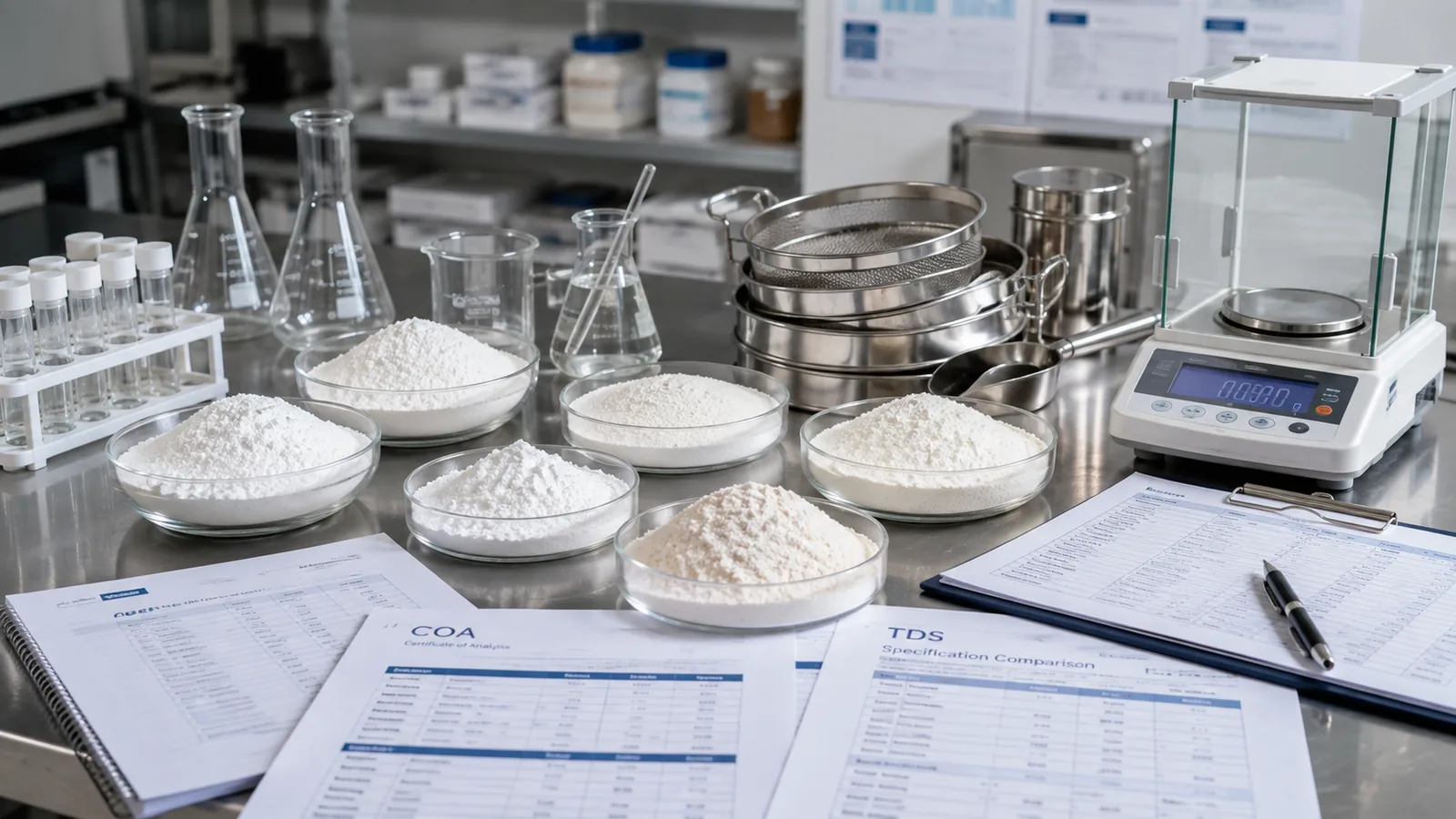
Technical Evidence

TDS, batch COA, certificates and traceability records answer different questions.

Use each document for the decision it can actually support. Request current versions and match product name, grade, site, lot and shipment information where relevant.

TDS

A Technical Data Sheet describes the product, typical or specified parameters, physical form, application information and other technical reference points supplied for that grade.

Use it to screen whether the grade appears technically relevant before deeper qualification.

Batch COA

A Certificate of Analysis reports test results or conformity information for a specific production batch according to the supplier's release system and agreed specification.

Use it for batch-level review and compare the reported items with the commercial specification.

Certificates

Food-safety, Halal or other certificates should be checked for certificate holder, validity period, audit or certification scope and whether the relevant product or site is covered.

Use current certificates as part of supplier qualification, not as a substitute for product testing.

Ingredient and Product Information

Ingredient descriptions, product statements and other declarations help regulatory, QA and labeling teams understand what is being purchased and what additional market-specific checks may be required.

Confirm the exact declaration needed for your destination market and internal approval process.

Traceability and Batch Records

Lot coding and traceability information connect raw material, production, test and shipment records so questions can be investigated at the correct batch level.

Review traceability capability when repeat supply and complaint investigation are important.

Shipment Documents

Commercial invoice, packing list, origin-related documents, health documentation when applicable and transport documents must correspond to the shipment and agreed trade requirements.

Confirm required documents before order release rather than after cargo is ready.

Method Comparability

Do not compare two numbers until you know they were produced on a comparable basis.

These rules reduce false supplier comparisons and help QA teams distinguish a real product difference from a difference in analytical method.

01

Same parameter name is not enough

Two documents may both say viscosity or particle size while using different instruments, sample preparation or reporting bases.

02

Check units and calculation basis

Confirm whether results are reported as received, on a dry basis, by percentage, concentration or another analytical basis.

03

Control sample preparation

Grinding, hydration, solids level, water quality, mixing and conditioning can change measured or observed performance.

04

Match temperature and shear

Viscosity and texture can change substantially with heating profile, shear and cooling, especially for starch products.

05

Separate specification from typical data

A typical value describes expected behavior, while a contractual limit defines commercial acceptance. Confirm which type of number you are reading.

06

Use the application trial as the final bridge

Even comparable laboratory data cannot predict every finished-food interaction. Validate the selected grade in your formula and process before locking the commercial specification.

Technical Data Request Checklist

Send enough context to receive documents that are actually useful.

A request for “COA and specification” is often too broad. Include the product, application and decision you are trying to make so the relevant grade and technical package can be matched to your project.

  1. 01

    Exact product name and physical form

  2. 02

    Intended food application and process

  3. 03

    Target function or quality issue to solve

  4. 04

    Technical parameters mandatory for approval

  5. 05

    Required test methods or internal standards, if any

  6. 06

    Expected dosage or formulation role, if known

  7. 07

    Sample quantity and trial timing

  8. 08

    Expected commercial volume after approval

  9. 09

    Destination country and required certificates or documents

  10. 10

    Whether you need TDS, sample COA, batch COA or other evidence

Need product-specific technical data?

Send the application first, then build the right data package around it.

Tell us which Potato Flakes, Potato Granules or potato starch product you are evaluating, how it will be used, which parameters matter to your QA or R&D team, and the expected commercial volume. We can then discuss the appropriate technical documents, sample path and quotation basis without presenting generic website data as a final specification.