Buyer FAQ
Frozen French Fries purchasing questions
These questions help importers, distributors, QSR, restaurant and private-label buyers prepare a more accurate RFQ and trial. Buyer research often asks how to choose a frozen-fries supplier, where to buy in bulk, which fries suit restaurants or fast food, how cut sizes are explained, how to fry commercially, how shelf life and cold-chain requirements work, and how coated versus uncoated or straight-cut versus shoestring products compare. A bulk buying or procurement guide should then ask for quality requirements, supplier checklist, import and export requirements, shipping and storage requirements, quality control, inspection, batch consistency, TDS and COA, and stable supply before a large-scale order.
What information should I send for a frozen French fries quotation?
Send the target cut or shape, coated or uncoated preference, skin-on or skin-off requirement, pack format, quantity, destination country or port, target channel and any color, texture, holding or documentation requirements. If you already use a reference SKU, describe it so the supplier can propose a closer comparison sample.
How should foodservice buyers choose between different frozen fries?
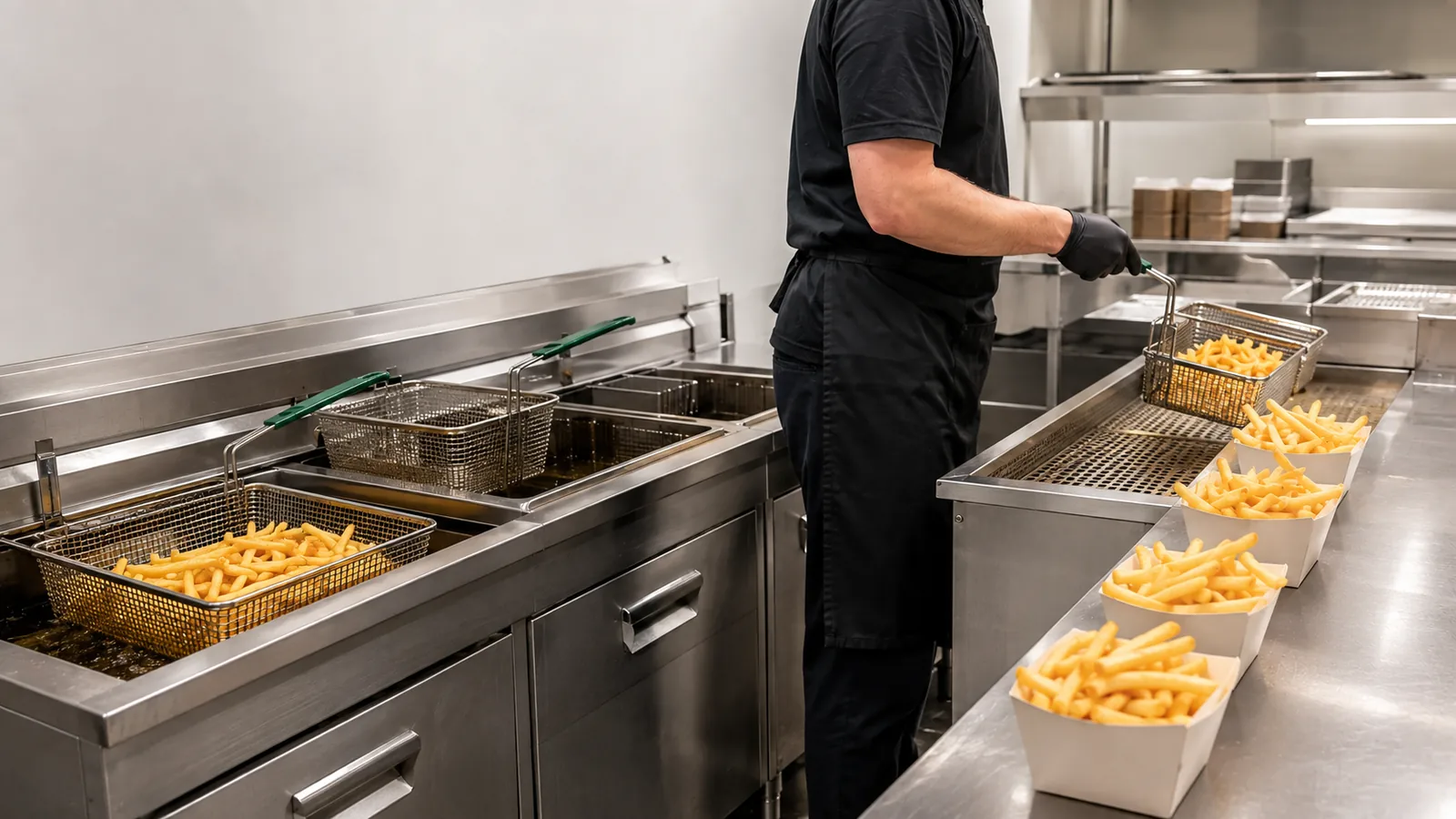
Use your actual fryer and standardized operating conditions. Compare fry color, exterior crispness, internal texture, breakage, short-piece percentage, prepared yield and performance after the real holding period. A small visual difference in the frozen product matters less than repeatable service performance.
What is the difference between coated and uncoated frozen French fries?
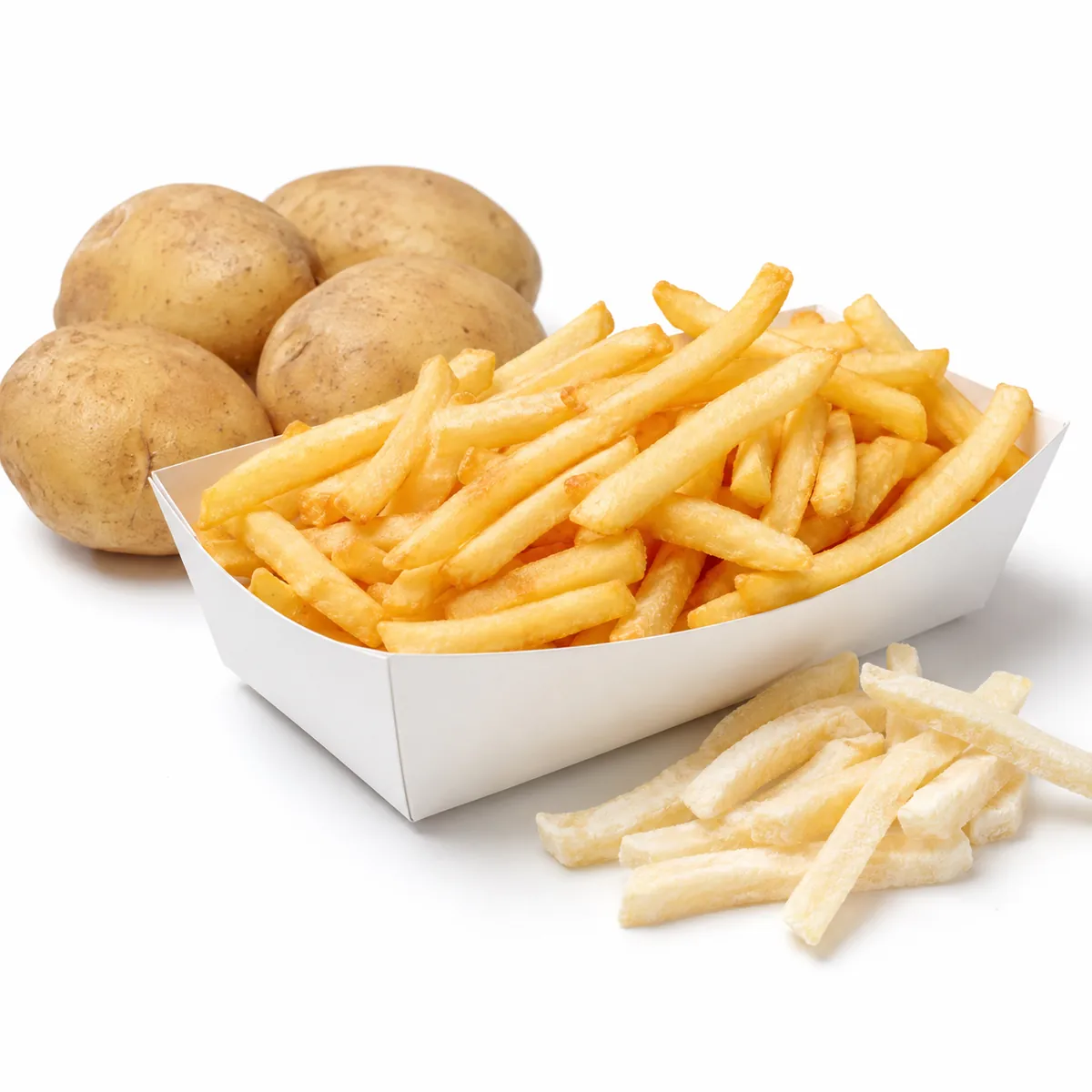
A coating can change exterior texture and holding performance, while an uncoated product may deliver a more direct potato surface and different eating profile. The better choice depends on fryer conditions, service speed, takeaway or delivery time and target sensory style, so both routes should be tested when holding is important.
Can you supply skin-on frozen French fries?
Skin-on and skin-off options can be discussed by SKU and manufacturing capability. Confirm the required visual style, cut, channel and expected volume before sample selection because the exact available combinations depend on the commercial product range.
How should I compare frozen fries samples?
Keep fryer, oil, temperature, basket load, fry time and draining method constant. Score the samples immediately and after the intended hold. Record color, crispness, internal texture, surface oil, breakage, portion yield and operational observations so purchasing and kitchen teams can make the decision from the same data.
Why is holding performance important for QSR and delivery?
Fries can be very crisp immediately after frying but soften quickly during staging, box packing or delivery. If your customer does not eat them immediately, the 5–15 minute performance under your real service condition can be more commercially important than the initial crispness score.
Can frozen French fries be customized under OEM / ODM?
Within technically feasible production ranges, OEM / ODM discussions can include cut or format, skin presentation, coating route, target color and texture direction, foodservice packaging and retail private-label packaging. Final options must be validated by sample, MOQ, production capability and signed specification.
Do frozen French fries use the same logistics as Potato Flakes or Potato Granules?
No. Frozen fries require frozen storage and reefer transport, while Potato Flakes and Potato Granules are dry dehydrated ingredients normally shipped under ambient dry conditions with moisture protection. Treat the cold chain as part of the frozen product program and quotation.
Can Potato Flakes or Potato Granules replace frozen French fries?
No. Frozen French Fries are a ready-to-fry frozen finished potato product. Potato Flakes and Potato Granules are dehydrated potato ingredients used by food manufacturers in fabricated chips, instant mash, snacks and other formulations. They belong to different product and processing routes.
Can you support retail private-label frozen fries?
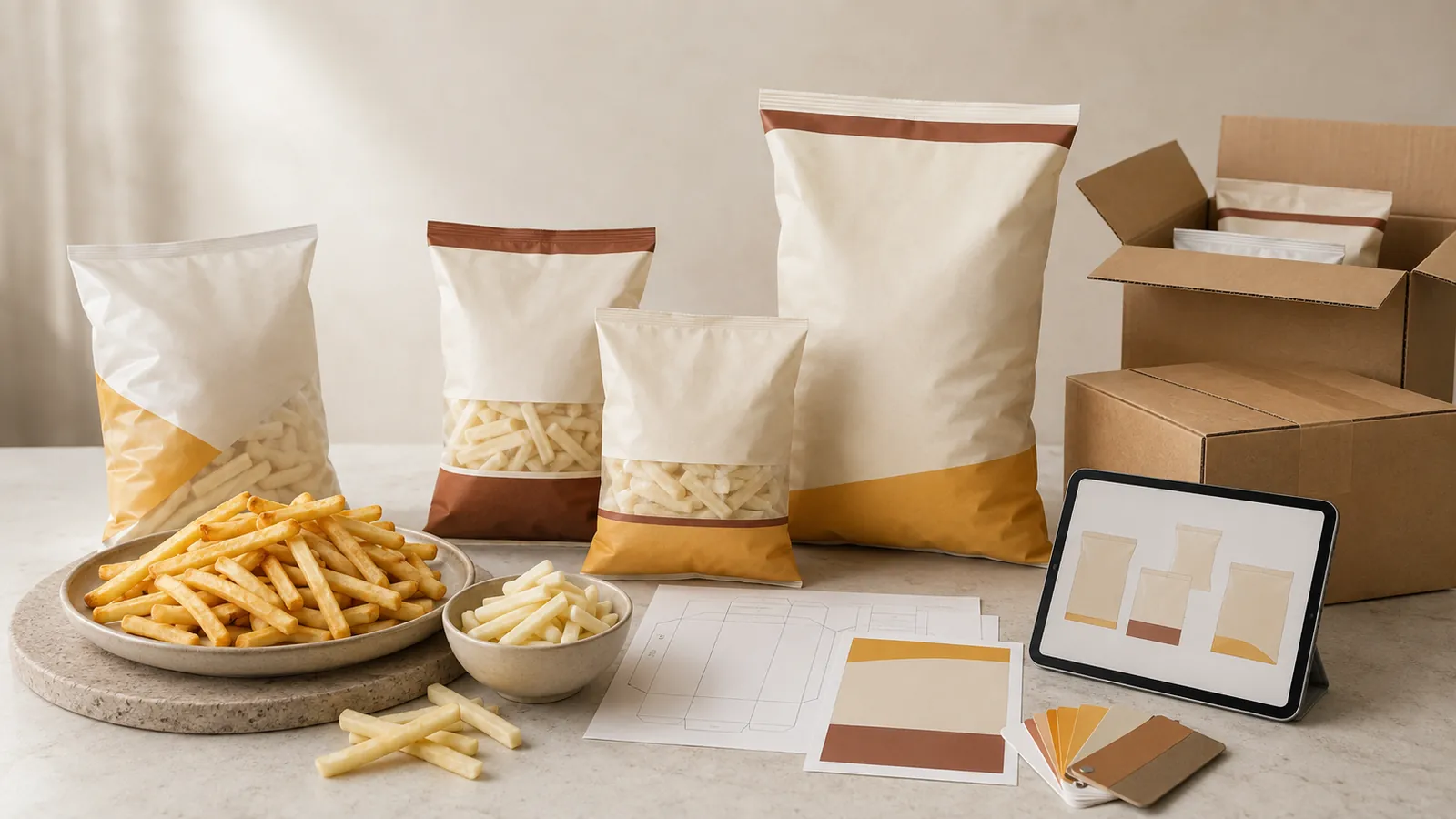
Private-label programs can be discussed for suitable volumes and available SKUs. Prepare the target pack weight, artwork, language, barcode or QR requirements, cooking instructions, carton marks and destination-market requirements so packaging feasibility can be reviewed together with the product.
What documents should an importer request?
Request the current commercial specification for the selected SKU and the food-safety, ingredient, label and shipment documents required by your market and internal supplier-approval process. The exact document package should be confirmed before the commercial order rather than assumed from a website logo.
What should be checked on the first commercial container?
Compare the first shipment with the approved sample and signed SKU specification. Check carton and bag condition, lot coding, cold-chain or receiving records where applicable, frozen product appearance and a standardized fry test. Keep this record as the baseline for repeat-order consistency.