
Should You Use Potato Flakes or Potato Granules for Your Food Product?
Should You Use Potato Flakes or Potato Granules for You […]
Potato Ingredients Knowledge Center
Use this Knowledge Center to compare Potato Flakes, Potato Granules, potato flour terminology and potato starch products from the perspective of formulation, processing, quality control and bulk procurement. The objective is not to choose from a product name alone, but to connect the ingredient with the finished food, process conditions, measurable specification and supplier evidence.
For food manufacturers, importers, distributors, procurement teams, QA and R&D, the most useful question is usually not “Which potato ingredient is best?” but “Which product, grade and specification best fit this application and how can we verify it before commercial purchase?” The sections below are organized around that decision process.
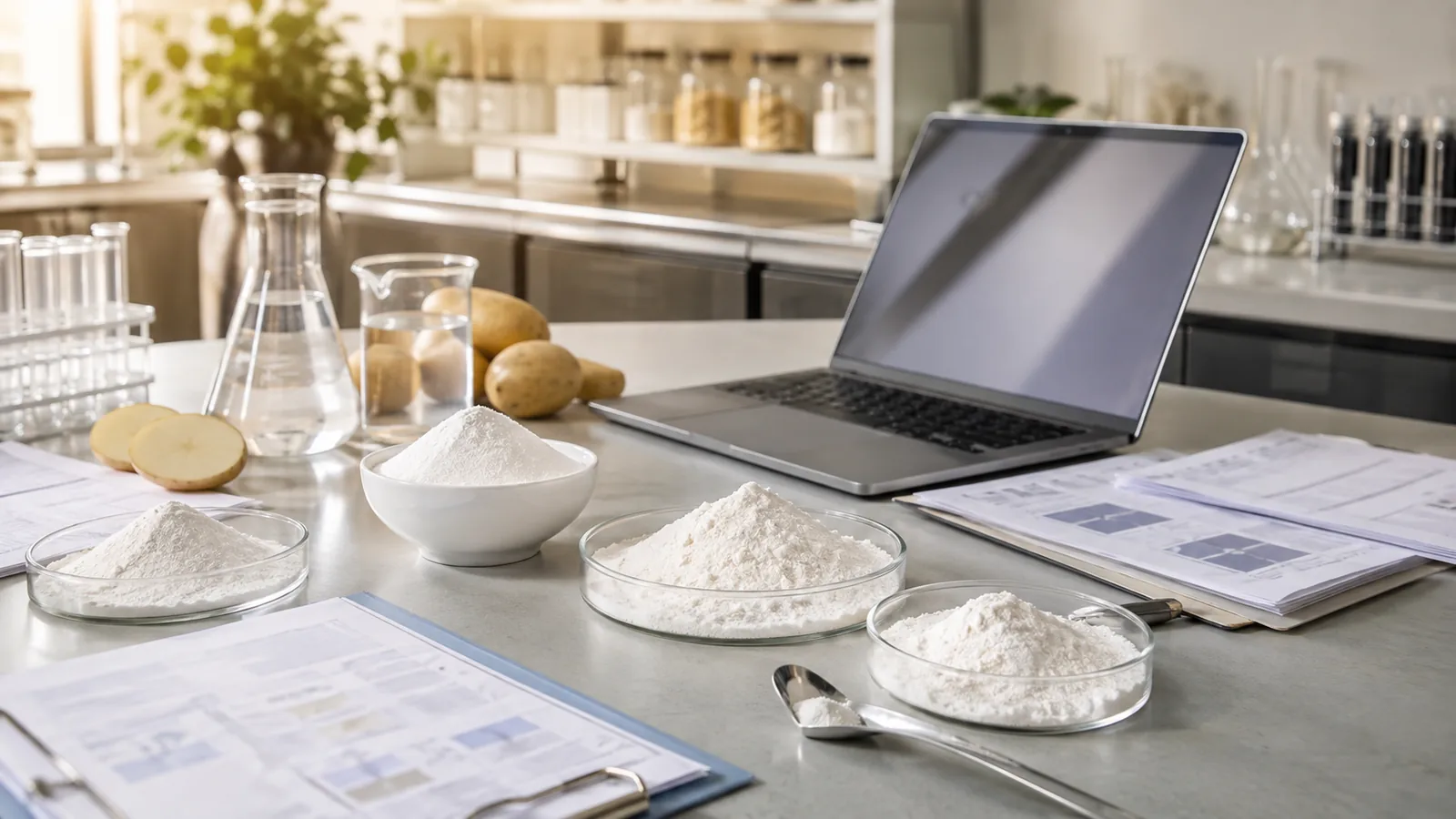
Should You Use Potato Flakes or Potato Granules for You […]
Potato Flour Shelf-Life Q&A How Long Does Potato Fl […]
Which Dehydrated Potato Ingredient Should You Choose: F […]
Should Food Manufacturers Use Potato Flour or Potato St […]
What Manufacturing Problems Can Potato Flakes Help Food […]
Potato Flakes Applications Q&A How Are Potato Flake […]
International Potato Flakes Procurement Q&A What Sh […]
Potato Flakes Application Q&A Which Potato Flakes G […]
Food-Grade Potato Flour Q&A What Is Food-Grade Pota […]
Potato Flour Supplier Verification Q&A How Can Food […]
Bulk Potato Flour Buyer Q&A What Should Food Manufa […]
Processing Potato Storage Q&A How Should Processing […]
Start with the question
These topics address the questions that most often create confusion when a buyer compares dehydrated potato ingredients, potato starch grades, specifications or samples. Read them as decision rules rather than isolated definitions.
potato flakes vs potato granules
Start with physical form, hydration, process handling and finished-product targets, then compare the cost at the formulation level rather than only the price per tonne.
potato flour meaning
The term can be interpreted differently across markets. Confirm whether the buyer means flakes, granules, another dehydrated whole-potato powder or starch before issuing a specification or quotation.
potato flakes specification
The answer depends on use. Moisture, color, flavor, particle structure, rehydration and microbiology can matter broadly, while reducing sugar becomes especially important in some frying applications.
potato granules bulk density
They can affect handling, packing, dispersion and process behavior. Compare supplier data with the receiving, dosing and hydration system used in your plant.
potato starch viscosity
A viscosity number is useful only when the test method and application conditions are understood. Match laboratory data to heating, shear, acidity and the texture target of the finished food.
food ingredient sample trial
Set a control formula, test conditions, acceptance criteria and recording method before testing. A documented trial is more useful than judging a sample by color or texture in isolation.
Core comparison
Both are dehydrated potato ingredients, but their physical form, handling and hydration profile are different. A useful comparison considers the finished product and process first, then checks whether the cost difference remains meaningful at formulation level.
Qualification rule
When two suppliers or two product formats are tested with different water ratios, mixing times or process conditions, the result can be misleading. Define the control formula, hydration method, processing sequence and acceptance criteria before comparing Potato Flakes with Potato Granules.
Ingredient Behavior Fundamentals
A useful technical discussion follows the sequence of water contact, heat, mechanical energy, solids balance and post-process handling rather than treating one laboratory number as the whole product.
Water contact is the first performance event. Addition order, water temperature, mixing intensity and available time can change how Potato Flakes, Potato Granules and pregelatinized systems disperse or rehydrate.
Heating changes starch viscosity, water binding and texture development. The same ingredient can behave differently in a cold-mix system, a cooked sauce or a baked product.
High-speed mixing, pumping and repeated handling can alter structure. Evaluate the ingredient under the mechanical conditions that resemble the commercial line.
Whole-potato solids and starch functionality solve different formulation jobs. Flavor, potato identity, viscosity, binding and yield should be separated before selecting the product family.
Initial texture is only part of performance. For chilled, frozen or prepared foods, check what happens during holding, cooling, freezing, thawing or reheating when those steps exist in the real process.
Need product-specific evidence?
Send the product, application, target function, technical priorities, expected quantity and destination. We can then discuss the relevant product family, available technical documents and a sample or RFQ path without treating a general website description as a final commercial specification.