Dehydrated Potato Ingredients · Buyer Guide

Potato Flour, Potato Flakes & Potato Granules for Food Manufacturing

If you are sourcing potato flour for industrial food production, the first purchasing decision is to identify the exact dehydrated potato format you need. Our core range is Food Grade Potato Flakes and Food Grade Potato Granules, supplied for snack, instant food, foodservice, bakery and prepared-food applications.

Buyers searching for a potato flour manufacturer, bulk potato flakes supplier or bulk potato granules supplier often use overlapping terms. We help you move from a broad search term to a usable specification by comparing particle structure, moisture, bulk density, reducing sugar, free starch, rehydration and the performance required in your finished product.

Food Grade Potato FlakesBulk Potato GranulesOEM / ODM SpecificationsTDS · COA · Sample Support
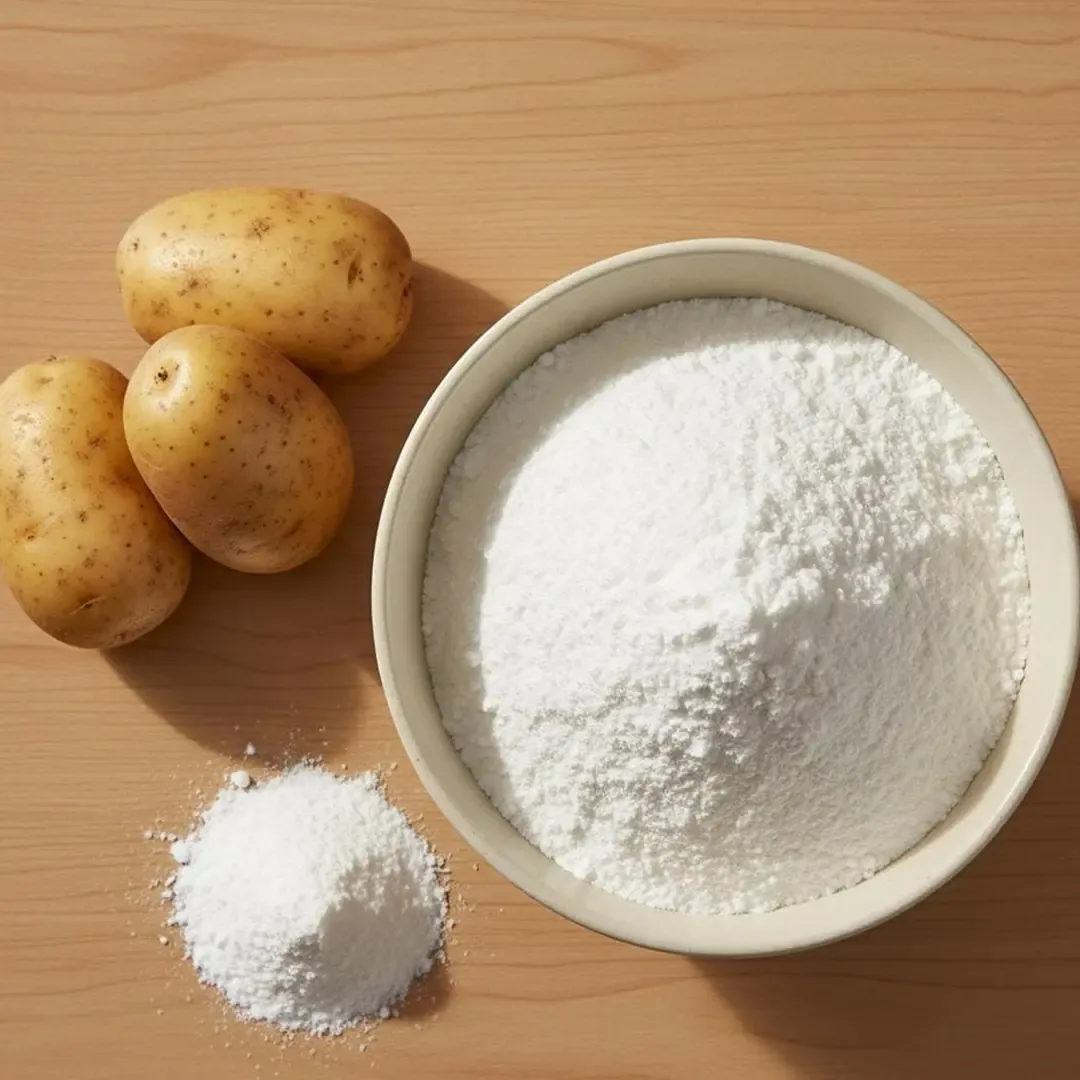
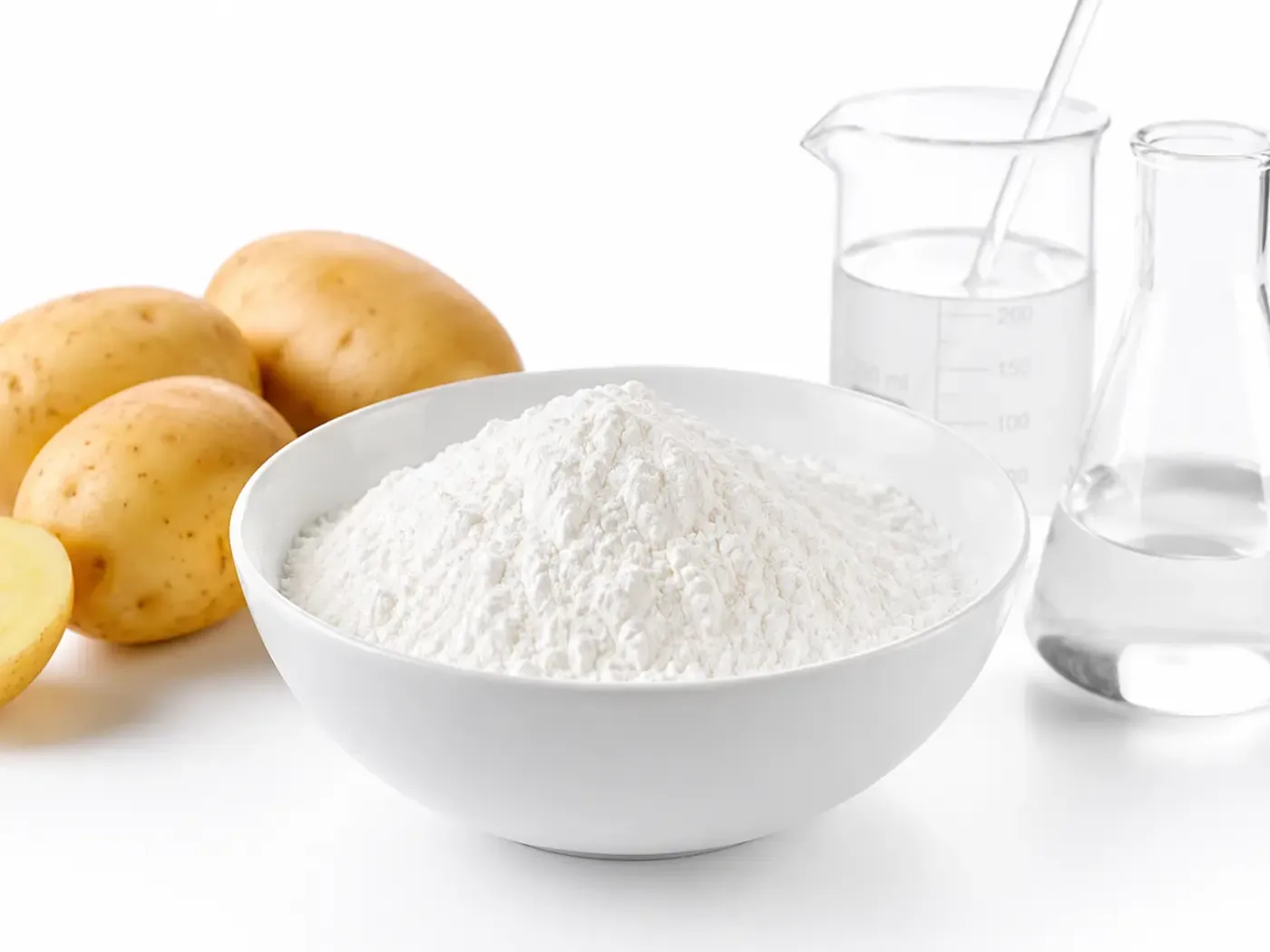
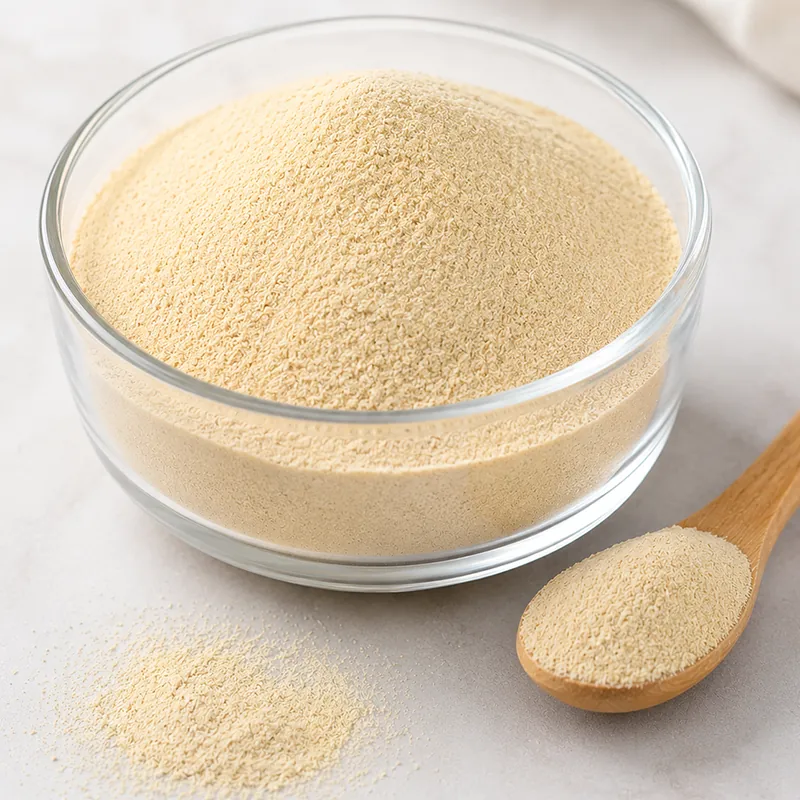
Potato flour concept - whole-potato ingredients from potato flakes and potato granules

What We Mean by Potato Flour

What does “potato flour” mean when you are actually buying an ingredient?

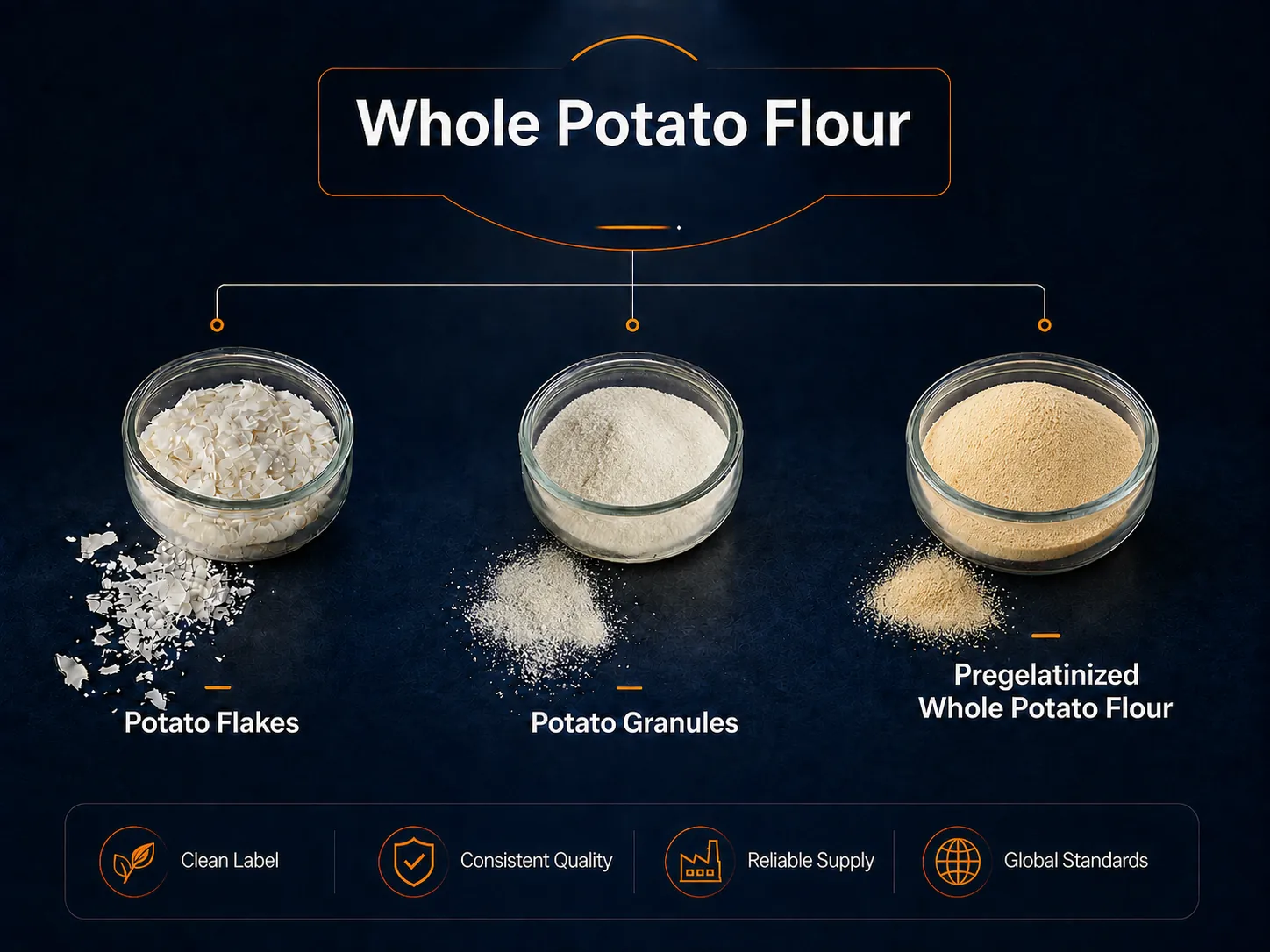
In Chinese potato processing, 马铃薯全粉 is commonly used as a broader category for dehydrated whole-potato products. For international procurement, however, the exact commercial form should always be stated.

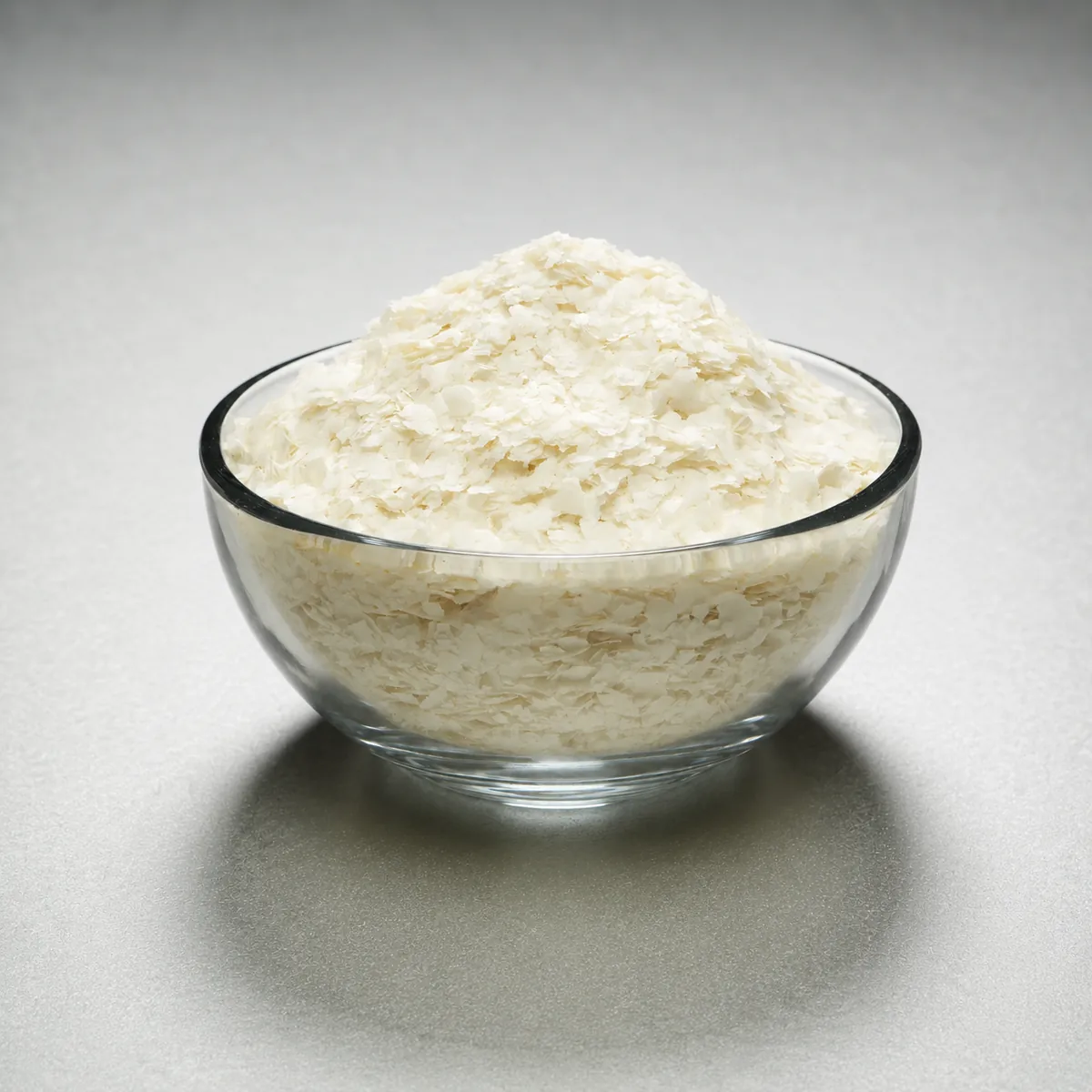
Potato Flakes are cooked potato solids formed into thin flakes through drum drying. Potato Granules are fine, dense dehydrated potato particles designed for more controlled rehydration and lower free-starch behavior. Finely milled potato flour can also exist as a separate commercial form in some markets. These products may share a potato raw-material origin, but they are not automatically interchangeable in a formulation or on a production line.

For that reason, this page uses potato flour as a terminology and category entry point, then guides you to the exact product. If your factory produces fabricated potato chips, instant mashed potatoes, extruded snacks, bakery products, frozen meals or foodservice mixes, tell us the finished product and process first. That information is more useful than asking only for potato flour price per ton.

Buyer recommendation: write Potato Flakes or Potato Granules in the RFQ whenever possible, then add the application, target specification, quantity, destination port and required documents.

Start Here

Choose the right route before comparing quotations

A professional potato ingredient comparison begins with the finished food and the production process. These three routes help procurement and R&D teams avoid comparing products that perform differently.

01

I need fast hydration, potato body or a snack-grade ingredient

Start with Potato Flakes when your process values rapid water absorption, potato solids, body, binding or an application-tested snack grade. Buyers of potato flakes for fabricated chips should pay particular attention to reducing sugar, moisture, free starch, particle size and frying color.

View Food Grade Potato Flakes →
02

I need controlled hydration, lower stickiness or foodservice consistency

Start with Potato Granules when you need fine free-flowing particles, high bulk density, low free soluble starch, controlled rehydration and consistent mash texture. This route is especially relevant for potato granules for instant mashed potatoes, institutional catering and dry mixes.

View Food Grade Potato Granules →
03

I need thickening, stability or instant functional performance

If the main requirement is viscosity, gel formation, freeze-thaw stability, acid or shear tolerance, or cold-water functionality, compare Native Potato Starch, Modified Potato Starch or Pregelatinized Potato Flour instead of forcing a whole-potato ingredient to do a starch-specific job.

Compare Related Potato Ingredients →

Core Potato Flour Formats

Potato Flakes and Potato Granules are our two core dehydrated potato products

Both products come from potatoes, but their particle structure, density, hydration and processing behavior are different. We give them equal priority because industrial buyers often need to compare the two before approving a grade for production.

Potato Flakes

Food Grade Potato Flakes for snacks, mash and formulated foods

Our Potato Flakes are positioned for industrial buyers that need dehydrated potato solids with fast hydration and flexible formulation use. Current purchasing references include 6–8% moisture and approximately 220–250 g/L loose bulk density, with particle size and reducing-sugar targets selected according to the grade. For fabricated potato chips and fried snacks, a low-reducing-sugar potato flakes grade should be assessed together with dough handling, frying color, oil uptake and breakage.

For instant mash, bakery, croquettes, soups, sauces and frozen prepared foods, the more important questions may be water absorption, body, binding, flavor and texture after holding. A bulk potato flakes supplier should therefore provide more than a price: request the current TDS, a representative sample and a batch COA route so your team can compare production performance as well as analytical limits.

See Potato Flakes specifications and applications →

Potato Granules

Food Grade Potato Granules for instant mash, foodservice and dry mixes

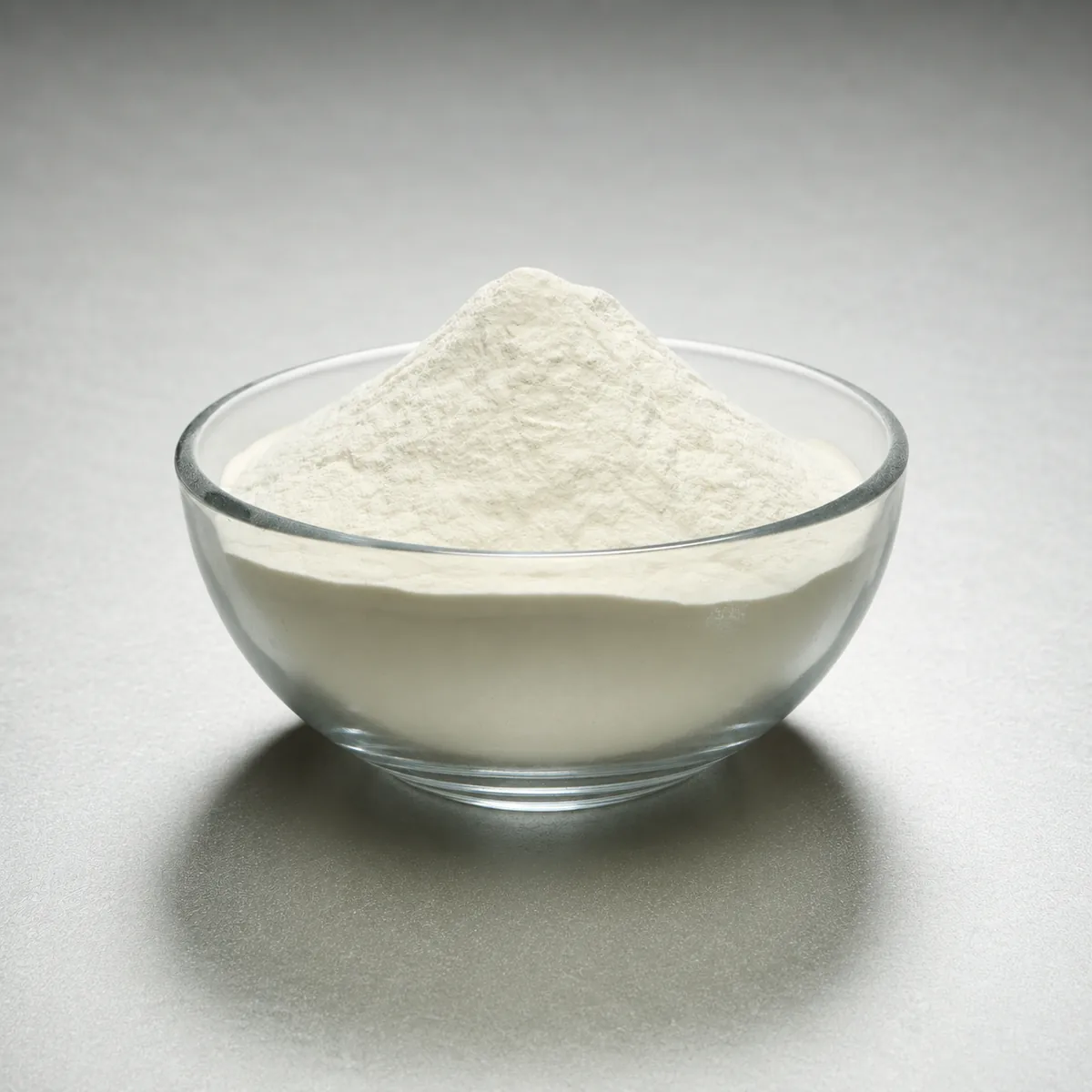
Our Potato Granules are fine, free-flowing dehydrated potato particles. Current product references include 40–60 mesh, moisture at or below 7% and bulk density of approximately 580 g/L. The product is characterized by low free soluble starch, low viscosity and controlled rehydration, which can help buyers who need portion consistency and less gummy texture in instant mashed potatoes or foodservice preparation.

Because granules are much denser than flakes, they behave differently in storage, volumetric dosing, dry blending and recipe conversion. Buyers searching for a bulk potato granules supplier should compare water ratio, hydration time, texture after holding, free starch, flowability and package fill rather than assuming a one-to-one substitution with flakes.

See Potato Granules specifications and applications →

Potato Flakes vs Potato Granules

Compare the processing behavior your factory will actually experience

The most useful comparison is not which product is better, but which structure gives your finished product the hydration, texture, handling and consistency you need. Use this table as a screening guide, then validate the selected grade on your own line.

Product structureThin drum-dried potato flakesFine, dense dehydrated potato granules
Hydration behaviorGenerally fast; water demand depends on grade and formulationMore controlled and gradual; useful for portion consistency
Bulk densityApprox. 220–250 g/L current referenceApprox. 580 g/L current reference
Free starch / stickinessGrade and processing dependent; excessive shear can increase gumminessLow free soluble starch and low viscosity are current product references
Texture directionSmooth, cohesive, body-building; can support bindingSmooth-to-mealy, lower stickiness and more natural particle definition
Fried snack focusReducing sugar, frying color, sheetability, oil uptake, breakageLess commonly the first choice; evaluate only if it supports the target dough and texture
Instant mash focusFast preparation and cohesive bodyControlled preparation, portion consistency and foodservice handling
Substitution ruleDo not replace granules 1:1 without a matched trialDo not replace flakes 1:1 without a matched trial

Do not approve a supplier from a comparison table alone

Two samples with the same product name can still behave differently because of raw-potato quality, particle distribution, cell damage, moisture, reducing sugar, free starch and processing history. Keep formulation, water, temperature, mixing and equipment settings constant when comparing samples, and record the finished-food result alongside the laboratory data.

Purchasing Reference

Typical Potato Flakes and Potato Granules specifications to discuss in an RFQ

The values below summarize current product-page purchasing references and are intended to help you ask better questions. They are not a substitute for the final signed product specification, selected-grade TDS or shipment COA.

Product formDehydrated Potato FlakesDehydrated Potato Granules
Particle size20–40 mesh reference; alternative sizes by agreed specification40–60 mesh reference; confirm final distribution
Moisture6–8% reference≤7% reference
Bulk densityApprox. 220–250 g/LApprox. 580 g/L
Reducing sugarFrying-grade target ≤1.5%; baked-snack target <3%, subject to selected gradeConfirm if the application requires a specific limit
Free soluble starch / viscosityApplication and process dependentLow free soluble starch; low viscosity reference
Packaging25 kg export bag; OEM / private-label options can be discussed25 kg export bag; OEM / private-label options can be discussed
Shelf life / HS code24 months reference · HS 110520000024 months reference · HS 1105200000

Specification notice: confirm the exact grade, test method, unit, tolerance, microbiological requirements, packaging and certificate scope before contract approval. Where a parameter affects your finished product, include it in the signed specification rather than relying on a website reference.

Buyer Selection Workflow

A better way to choose a potato flour supplier and commercial grade

Whether you are buying one trial lot or planning long-term container supply, the same four-step logic helps reduce formulation changes, rejected batches and supplier-comparison errors.

01

Define the finished product

Tell us whether you manufacture fabricated potato chips, instant mashed potatoes, foodservice mash, extruded snacks, bakery, soups, frozen foods or another product. The finished product determines which performance attributes deserve priority.

02

Define the process stress

Share water temperature, mixing intensity, frying, baking, extrusion, pumping, freezing, reheating or hot-hold conditions. An ingredient that works in a bench cup may behave differently on an industrial line.

03

Convert the need into measurable specifications

Shortlist moisture, particle-size distribution, bulk density, reducing sugar, free starch, hydration, viscosity, microbiology or other parameters that directly affect your process. Agree on methods and units before comparing numbers.

04

Approve by sample and batch evidence

Run a representative factory trial, keep an approved reference sample and confirm how the commercial batch will be checked through the final specification and COA. This is more reliable than choosing only by price per metric ton.

Choose by Application

Which dehydrated potato ingredient should enter your factory trial?

The same Potato Flakes or Potato Granules grade will not be ideal for every food. Use the application goal to decide which route deserves the first sample, then adjust the specification around the real line result.

Fabricated Potato Chips & Stackable Crisps

What the buyer usually needs: Controlled frying color, workable dough, crisp structure, low rejection and stable seasoning adhesion.

Recommended starting route: Start with snack-grade Potato Flakes and evaluate reducing sugar, moisture, particle size, free starch, sheetability and frying performance. Native or Modified Potato Starch may be added according to the formulation.

Instant Mashed Potatoes

What the buyer usually needs: Predictable water ratio, smooth texture, quick preparation and good flavor without excessive gumminess.

Recommended starting route: Compare Potato Granules for controlled hydration and lower stickiness against Potato Flakes for faster hydration and more cohesive body. The preferred result depends on the desired mash style.

Foodservice & Institutional Catering

What the buyer usually needs: Portion consistency, simple preparation, holding stability and reliable results across large batches.

Recommended starting route: Potato Granules are a strong starting route because of controlled hydration and high bulk density. Flakes can be evaluated where faster preparation or a different body is preferred.

Extruded & Formed Potato Snacks

What the buyer usually needs: Consistent feed, dough handling, expansion or forming behavior, texture and process stability.

Recommended starting route: Evaluate Potato Flakes, Potato Granules and Potato Starch as a system. The best route depends on moisture, equipment, shear and desired texture rather than a universal ingredient ratio.

Bakery, Prepared & Frozen Foods

What the buyer usually needs: Water management, binding, potato flavor, body, freeze-thaw behavior or reheating stability.

Recommended starting route: Flakes or Granules can provide whole-potato solids, while Native, Modified or Pregelatinized Potato Starch may be more suitable when the primary need is thickening or stability.

Soups, Sauces & Dry Mixes

What the buyer usually needs: Fast dispersion, controlled viscosity, clean flavor and predictable preparation.

Recommended starting route: Granules or flakes can contribute potato solids and flavor; choose Pregelatinized or Modified Potato Starch when instant thickening or stronger process tolerance is the main requirement.

Formulation Development

Can Potato Flakes and Potato Granules be used together?

Yes. In some formulations, combining both formats can help R&D teams balance fast hydration and binding from flakes with lower stickiness, denser dry handling and texture definition from granules.

A blend can be useful in instant foods, formed potato products, frozen meals, snacks or foodservice systems when one ingredient alone does not give the desired mouthfeel and process behavior. The correct ratio should come from a controlled formulation trial. Do not assume that a blend used by another factory will give the same result on different equipment or with different starch, fat, salt and water levels.

Treat blending as formulation development, not as a shortcut for inconsistent raw material. Each component still needs an approved specification and batch-consistency plan.

Potato Flakes

What flakes can contribute

Fast hydration, smoothness, potato body, cohesion and binding. In snack systems, the selected grade can also contribute the potato-solids base needed for forming and frying.

Potato Granules

What granules can contribute

Controlled hydration, lower stickiness, high bulk density, good dry-mix flow and a more defined potato texture. These traits can help with portion control and process handling.

OEM / ODM Potato Ingredient Customization

Customize the product specification around your process, not only the packaging

For qualified projects, OEM and ODM discussions can cover technical attributes as well as bag size, labeling and private label. Final customization is subject to technical feasibility, trial approval, MOQ, legal requirements and a mutually confirmed specification.

Potato Flakes specification customization

Discuss particle size, moisture, bulk density, reducing-sugar direction, hydration or water absorption, appearance controls and application-specific performance. Fried snack projects should define how frying color and dough behavior will be evaluated.

Potato Granules specification customization

Discuss mesh or particle distribution, moisture, bulk density, free soluble starch, viscosity direction, rehydration behavior and target mash texture. The final requirement should match the buyer’s preparation method and equipment.

Packaging, label & private-label customization

Discuss bag weight, inner and outer packaging, customer brand, destination-language labels, barcode or QR code, shipping marks, pallet configuration and other approved packaging requirements together with the product specification.

Sample Testing & Qualification

Approve the ingredient in your process before you approve the full-container order

A useful sample test should answer whether the offered grade works in your formulation and whether the supplier can define the same performance for commercial batches. Visual inspection alone is not enough.

01

Send the application brief

Provide the finished product, existing formulation direction, process, target texture, annual or trial quantity and any critical analytical limits. This helps us select a more relevant sample instead of sending a generic grade.

02

Receive sample and technical information

Review the sample together with the current TDS or purchasing specification. Confirm product identity, storage, packaging, key limits and any certificate or declaration required for your internal supplier approval.

03

Run a controlled side-by-side trial

Keep formulation, water, temperature, mixing, equipment settings and evaluation method constant. Record hydration time, texture, dough behavior, frying or cooking result, yield and any application-specific rejection criteria.

04

Agree the commercial specification

Turn the successful trial into measurable acceptance criteria. Define methods, units and tolerances for the parameters that matter, and confirm which items will appear on the commercial COA.

05

Monitor the first commercial batches

Compare incoming batches with the approved reference sample and specification. Record performance on the real production line so any trend can be discussed with evidence rather than subjective descriptions.

Technical Documents & Quality Evidence

What should a serious bulk potato ingredient supplier provide?

Supplier qualification needs documents that answer different questions. Ask for the current document for the exact product grade instead of relying on a website logo or a generic certificate image.

TDS / Product Specification

Use the Technical Data Sheet or agreed specification to review product description, analytical limits, functional direction, packaging, storage and other commercial requirements before sample approval.

Batch COA

The Certificate of Analysis should identify a specific commercial batch and report the tests agreed for release. It is not interchangeable with a generic TDS.

Food-safety & market documents

Request applicable certificates, ingredient statements, allergen information, nutrition data, origin documents or other market-specific files according to the selected product and destination.

Application trial records

For performance-sensitive products, retain trial conditions and approved results. Analytical data and factory performance should support each other when the buyer sets an acceptance standard.

Bulk Supply & Export Planning

Plan the quotation around grade, volume, packaging and destination

A comparable bulk quote needs more than a product name. Give the supplier enough information to calculate the correct grade, production plan, packaging, container loading and trade term.

Bulk packaging

Core dry ingredients are commonly discussed in 25 kg export bags. OEM, private-label and alternative packaging should be confirmed against the product, order size, destination rules and packing-line capability.

MOQ & supply planning

MOQ varies by product, customized specification, packaging and shipment plan. For long-term purchasing, share annual demand and shipment frequency so capacity, raw-material planning and lead time can be discussed realistically.

FOB / CIF quotation

Provide the destination port and preferred Incoterm so the quotation can separate product, inland logistics, ocean freight and insurance where applicable. This makes supplier comparisons more transparent.

Batch consistency & traceability

For repeat industrial use, consistency across shipments matters as much as the first approved sample. Confirm batch coding, COA process, retained-sample logic and how specification changes will be communicated.

Buyer FAQ

Potato Flour, Potato Flakes and Potato Granules questions before ordering

These questions cover the high-intent issues buyers usually need to resolve before requesting a sample, approving a specification or comparing bulk quotations.

Are Potato Flakes and Potato Granules both considered potato flour?

In Chinese industry language, 马铃薯全粉 is commonly used as a broad category for dehydrated whole-potato products, including flakes and granules. In international trade, potato flour can also mean a separate finely milled product. For an accurate RFQ, identify Potato Flakes or Potato Granules and state the application.

What is the difference between Potato Flakes and Potato Granules?

Flakes are thin drum-dried potato solids that generally hydrate quickly and can provide body, binding and a smooth cohesive texture. Granules are finer and denser, with current references of low free soluble starch, low viscosity and controlled rehydration. The better choice depends on the finished food and process.

Which potato flakes are suitable for fabricated potato chips?

Start with an application-tested snack grade and evaluate reducing sugar, moisture, particle size, free starch, dough sheetability, frying color, oil absorption, breakage and seasoning adhesion on your actual line. A frying-grade reducing-sugar target of ≤1.5% is a current reference for selected grades, not a universal guarantee.

Which potato granules are suitable for instant mashed potatoes?

A 40–60 mesh food grade Potato Granules product with controlled hydration, high bulk density and low free soluble starch is a useful starting reference. Final approval should compare water ratio, mixing, hydration time, smoothness, stickiness, holding stability and portion yield in the buyer’s preparation method.

Can Potato Flakes and Potato Granules replace each other one-to-one?

No. Their density, hydration, free-starch behavior, texture and volumetric handling differ. Convert formulations by weight, then run a matched trial and adjust water, mixing and other ingredients rather than making a direct visual-volume substitution.

Can Potato Flakes and Potato Granules be blended together?

Yes. Some formulations combine flakes for rapid hydration, body and binding with granules for lower stickiness, dry flow and texture definition. The blend ratio must be developed and validated in the actual product rather than copied from another factory.

What information should I send to a potato flour manufacturer for an accurate quote?

Send the exact product form, application, critical specification, quantity per shipment, annual demand, packaging, destination port, Incoterm, sample requirement and required documents. For fried snacks, add the target reducing sugar or frying-color requirement if you have one.

Can the particle size, bulk density or other product properties be customized?

Selected technical attributes may be discussed through OEM or ODM development, including particle size, moisture, bulk density, reducing-sugar direction, hydration, free starch, viscosity or functional behavior where technically feasible. Final limits require trial approval, MOQ confirmation and a signed specification.

What is the difference between potato flour and potato starch?

Whole-potato ingredients contribute broader potato solids, flavor and texture, while potato starch is the purified starch fraction used mainly for viscosity, thickening, binding and gel formation. They should not be treated as direct one-to-one substitutes.

Should I request a sample, TDS and COA before a bulk order?

Yes. Use the sample to confirm application performance, the TDS or specification to define the offered grade, and the COA process to understand how a commercial batch will be released. For long-term supply, agree the critical methods and acceptance limits before the first full-container order.

RFQ · Samples · TDS · COA

Tell us whether you need Potato Flakes, Potato Granules or help choosing between them

Share your finished product, production process, target specification, required quantity and destination port. We can then discuss the more suitable dehydrated potato format, sample route, OEM / ODM options, technical documents and bulk quotation.