
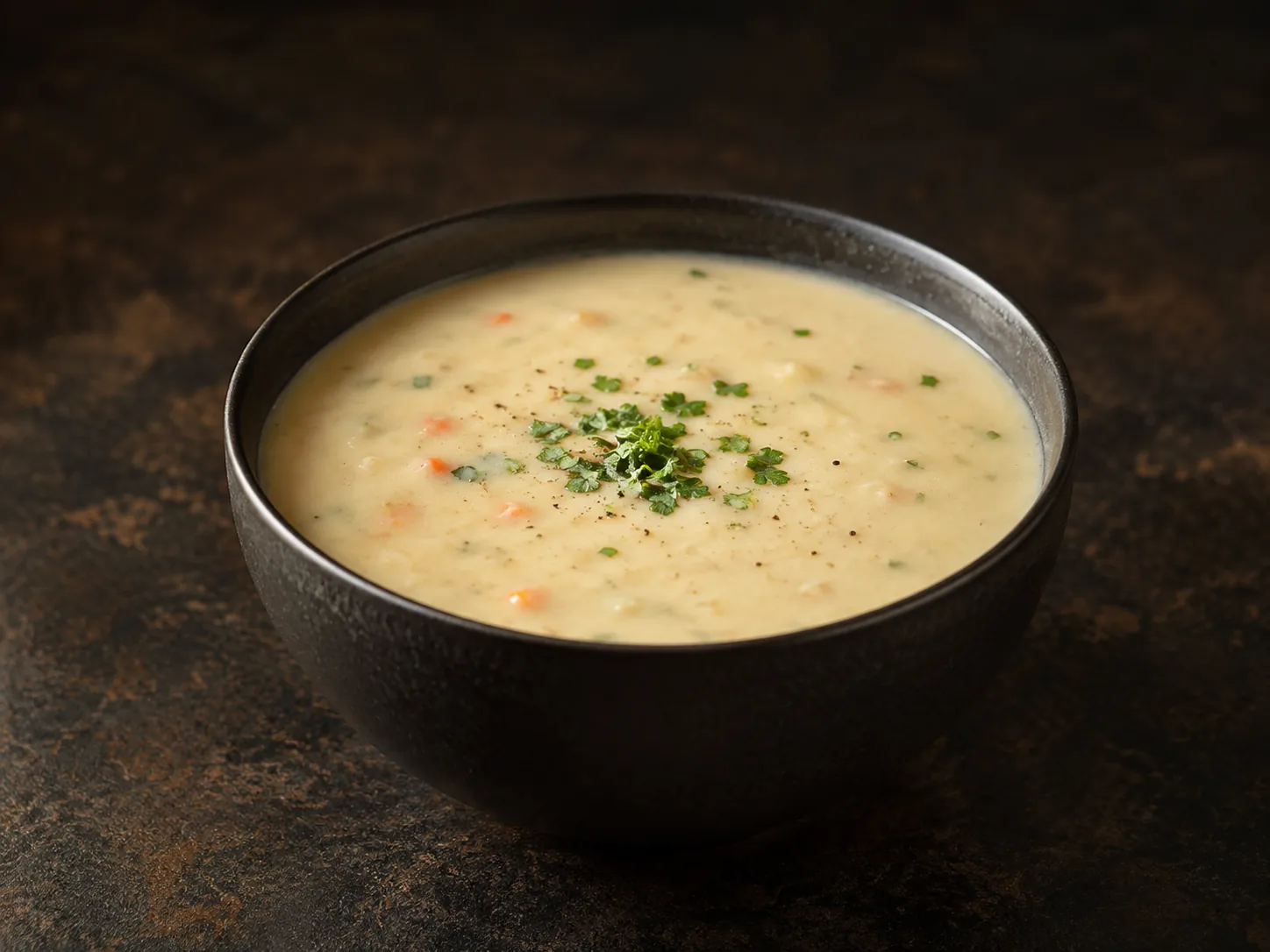
Application Guide · Soups, Sauces & Gravies

Potato Ingredients for Soups, Sauces, Gravies & Savory Fillings

Choose Native Potato Starch, Pregelatinized Potato Flour or Modified Potato Starch by the way your product is mixed, heated, pumped, held, cooled and reheated. If your recipe also needs real potato solids, potato flavor or a fuller potato body, Potato Flakes and Potato Granules can enter the formulation as separate whole-potato ingredients rather than as starch substitutes.

For industrial soups and sauces, the useful question is not simply “Which starch is thickest?” A commercial grade must reach the target flow and cling, disperse without unacceptable lumps, tolerate the actual pH, salt, sugar, fat and shear conditions, remain workable during filling or pumping, and still deliver the intended texture after hot holding, cooling or reheating. This page helps procurement and R&D teams define those conditions before comparing suppliers.

Native Potato Starch for SaucesPregelatinized Potato Flour for Instant SoupsModified Potato Starch for Process StabilityPotato Flakes for Potato SoupsTDS · COA · Sample Trial
Potato starch for soups and sauces - kettle cooking line

Why this route is worth testing

Soups & Sauces

For soups, sauces, gravies and savory fillings, the key question is usually not “which potato ingredient” but “what viscosity and stability must the system maintain.” Native potato starch for sauces suits many heated systems; pregelatinized potato flour supports rapid or cold/warm-water thickening; modified potato starch is considered when process stress is higher.

Provide target viscosity, solids, pH, salt, sugar, fat, heating profile, shear, hot holding, cooling and freeze-thaw requirements. These conditions determine whether native, pregelatinized or modified starch is the more appropriate technical route.
What each potato ingredient contributes to the formulation

Start with the function the formulation needs. Starch routes mainly manage viscosity, binding and process stability, while Potato Flakes and Potato Granules add dehydrated whole-potato solids, potato flavor and their own hydration behavior.

Potato Flakes

Best starting route when you need dehydrated potato solids, fast rehydration, potato flavor and body. Frequently evaluated for fabricated chips, instant mash, bakery, croquettes, snacks and prepared foods. For fried applications, reducing sugar and frying color deserve specific attention.

View product details →

Potato Granules

Best starting route when you need dehydrated potato solids with controlled rehydration, lower-stickiness direction, dense bulk handling and good dry-mix behavior. Especially relevant to instant mashed potatoes, foodservice, portioned dry mixes and selected prepared foods.

View product details →

Native Potato Starch

Best starting route for heated systems that need thickening, gelling, binding or moisture management without a modified starch. It generally requires sufficient heating to gelatinize and should be tested with the actual pH, solids and shear conditions.

View product details →

Pregelatinized Potato Flour

Best starting route when rapid hydration, cold- or warm-water dispersibility, instant thickening, water uptake or early-stage binding is needed before full heating. It is not automatically the best route for strong acid, retort or freeze-thaw stress.

View product details →

Modified Potato Starch

Best starting route when the process requires functionality beyond standard native starch, such as improved tolerance to specific heat, acid, shear, holding or freeze-thaw conditions. Select the exact grade by process requirements and sample validation.

View product details →

Select the ingredient route from your processing conditions

Two sauces with the same target viscosity can require different ingredients if one is cooked gently in a kettle and the other is pumped under shear, acidified, hot-filled, frozen or prepared instantly by the consumer. Define the process before asking for a grade recommendation.

Processing situationStarting ingredient routeWhy it is worth testing
Fully heated soup, gravy or sauce with moderate process stressNative Potato StarchA practical starting route when sufficient heating is available to gelatinize the starch and the process does not demand exceptional acid, shear or freeze-thaw tolerance.
Instant soup, dry mix, cold/warm-water sauce or short heating processPregelatinized Potato FlourProvides rapid hydration and early viscosity where the process cannot rely on a full cooking step. Dispersion and lump control must be tested in the actual mixing sequence.
Acidic, high-shear, long hot-hold, retort-like or freeze-thaw-sensitive systemModified Potato StarchSpecific modified grades can be screened when native starch loses viscosity or water control under the real process stress. Grade selection still requires sample validation.
Potato soup, potato gravy, savory filling or sauce needing potato solids and flavorPotato Flakes / Potato GranulesUse whole-potato ingredients when the goal includes potato solids, flavor and body rather than starch functionality alone. Flakes and granules should be evaluated for hydration and texture separately.

Viscosity & Flow

Define the flow behavior you need, not just one viscosity number

A laboratory viscosity value is useful only when the test method, solids level, temperature, shear history and measurement time are understood. In production, a sauce must also pump, fill, coat or cling correctly and remain acceptable after holding and reheating.

For pourable soups, a lower apparent viscosity may be desirable so the product flows through pipes and fills consistently. For gravies, dips, fillings or sauces that must cling to meat, fries or prepared foods, the target may require more body or yield stress. These are different rheological jobs even when both products are described as “thick.”

When comparing samples, keep the water or broth composition, starch dosage, pH, salt, sugar, oil, heating profile, mixing speed and measurement temperature constant. Record pumpability, spoon or pour behavior, coating or cling, filling consistency and texture after hot holding instead of relying on a single peak-viscosity figure.

  • Target viscosity at serving temperature
  • Pour / pump / fill behavior
  • Sauce cling or coating
  • Peak versus final viscosity
  • Texture after 10–30 minutes hot holding
  • Viscosity after cooling and reheating
  • Water release or syneresis
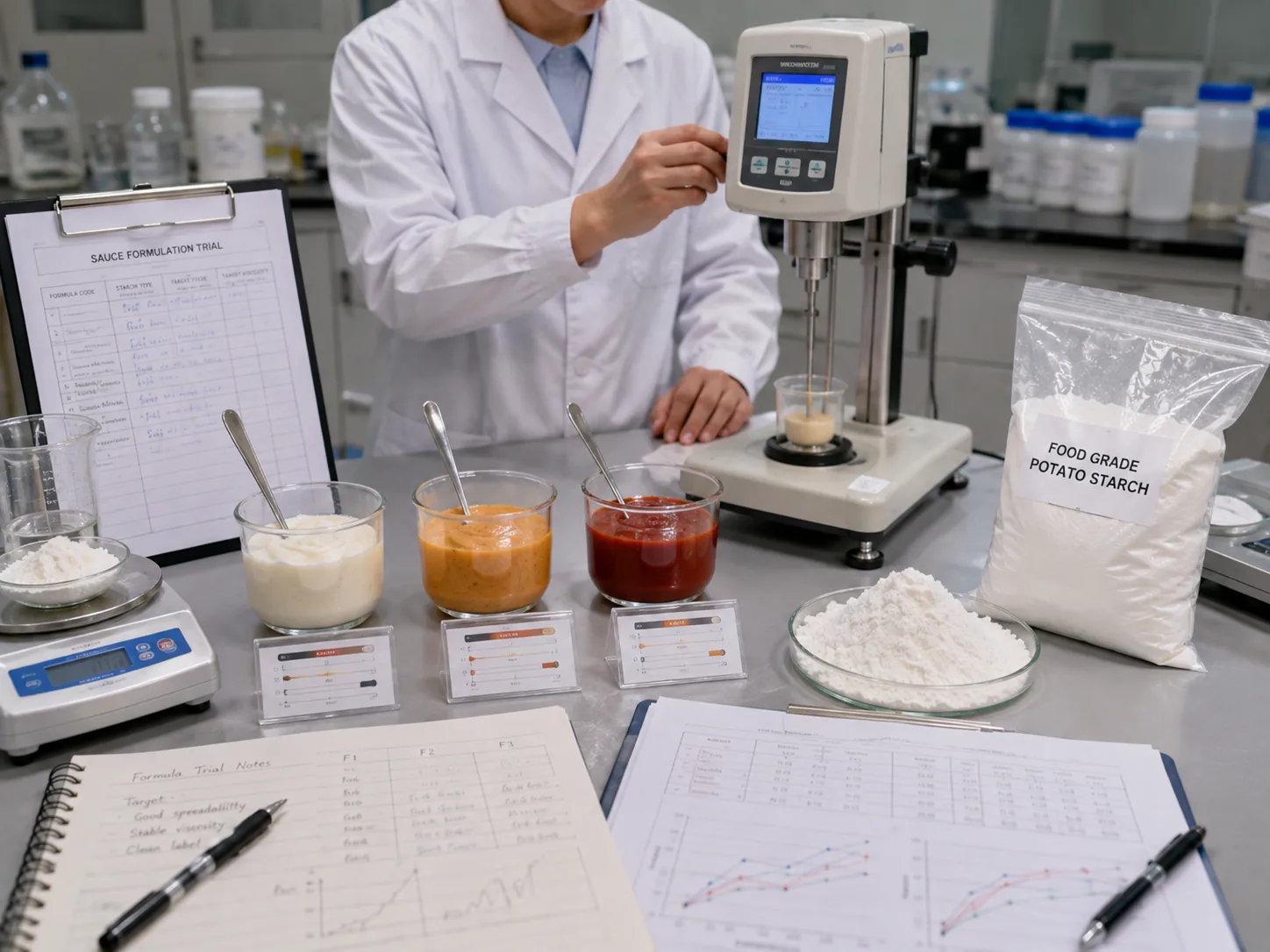
Viscosity and flow testing of potato starch in soup base at the Junsheng lab

Formula variables can change starch performance dramatically

pH, salt, sugar, fat, protein, solids and shear alter hydration and viscosity development. A supplier sample should therefore be tested in the customer formula rather than in plain water alone.

Formula or process variableWhat it can changeWhat the customer should record
pH / acid additionGelatinization, viscosity retention and long-hold stability can change as acidity increases.Final pH, acid addition point, viscosity before and after holding.
Salt / sugar / soluble solidsCompetition for water can alter hydration rate and final body.Exact concentration, mixing order, time to target viscosity and final texture.
Fat / emulsion systemChanges mouthfeel, coating and the way thickening is perceived.Oil level, emulsion stability, sauce cling and separation after storage.
Shear / pumping / homogenizationCan reduce viscosity in grades that are not tolerant of the actual mechanical stress.Mixer speed, pump type, passes, pressure where relevant and viscosity after processing.
Hot holding / fillingLong exposure to heat can change body, flow and water control.Temperature, hold time, filling behavior and texture at the end of holding.
Cooling / refrigeration / freezingMay expose syneresis or texture changes that are not visible when the product is hot.Cooling curve, free water, reheated texture and freeze-thaw result where applicable.

Heated Systems

Native Potato Starch for soups, sauces and gravies

Native Potato Starch is a strong starting route when the formulation has enough controlled heating to gelatinize the starch and the process conditions are not more demanding than the native grade can tolerate.

It can contribute thickening, body, binding and a relatively clean sensory profile in many cooked sauces, gravies and soup bases. The customer should verify gelatinization temperature, final viscosity, shear exposure, pH, salt level, hot-hold stability and reheating behavior in the real formula. If native starch thins, separates or loses water control under the required process, the correct next step is to compare a suitable Modified Potato Starch rather than simply increasing dosage.

View product details →

Instant & Short-Process Systems

Pregelatinized Potato Flour for instant soups and rapid thickening

Pregelatinized Potato Flour is useful when the formulation needs viscosity, water absorption or binding before a full cooking step, including instant soup mixes, cold/warm-water preparation and shortened heating processes.

Because it hydrates quickly, dispersion strategy matters. Very rapid surface hydration can create fish-eyes or lumps if the powder is added too quickly or the mixer does not wet it uniformly. Test dry preblending, addition rate, water temperature, shear and rest time. Pregelatinization improves early hydration; it does not by itself prove acid, retort or freeze-thaw stability.

View product details →

Higher Process Stress

Modified Potato Starch when the sauce must remain stable through tougher processing

Modified Potato Starch should be screened by exact grade when the sauce or filling must tolerate conditions that exceed the practical stability of Native Potato Starch.

Relevant stresses can include low pH, strong shear, prolonged heating, hot holding, sterilization-type processing, refrigeration or freeze-thaw exposure. Do not select a modified starch from an E-number alone: provide the process profile, target texture, storage condition and labeling requirements, then validate the proposed grade in the finished formulation.

View product details →

When the customer needs potato solids, not only thickening

Potato soups, potato gravies, savory fillings and potato-based prepared foods may need authentic potato solids and flavor in addition to starch functionality. This is where Potato Flakes and Potato Granules can complement, rather than replace, the starch system.

Potato Flakes for potato soups & savory systems

Food Grade Potato Flakes contribute dehydrated whole-potato solids, potato flavor, rapid rehydration and body. They can help build a fuller potato profile in creamy potato soups, fillings and prepared foods, but their water demand must be balanced with the rest of the formula.

Potato Granules for controlled potato texture

Food Grade Potato Granules contribute whole-potato solids with more controlled rehydration, higher bulk density and a lower-stickiness direction. They can be evaluated where the customer wants potato character with a more controlled hydration profile or dry-mix handling.

Starch remains a separate functional tool

Native, pregelatinized and modified potato starches are selected primarily for viscosity, binding and process stability. Potato Flakes and Potato Granules should not be treated as 1:1 starch replacements, even when all materials are potato-derived.

Native vs Pregelatinized vs Modified Potato Starch

Use this table as a route-selection guide, then confirm the exact commercial grade in the full recipe and process.

Decision pointNative Potato StarchPregelatinized Potato FlourModified Potato Starch
Main reason to useCooked-system thickening, body and bindingRapid hydration and early viscosity without full cookingTargeted stability under more demanding process conditions
Heat requirementNormally requires sufficient gelatinization heatCan hydrate in cold or warm water depending on gradeDepends on exact modified grade and application
Instant / dry mixUsually not the first route for cold preparationStrong route for instant and short-process systemsPossible only when the selected grade is designed for that need
Acid / shear / long holdingProcess dependent and may be limitingPregelatinization alone does not guarantee toleranceSelect grade specifically for the required stress profile
Freeze-thawNot automatically suitableNot automatically suitableSpecific modified grades may be evaluated for freeze-thaw needs
Qualification focusGelatinization, viscosity, pH, shear and holdDispersion, lumping, hydration speed, final textureExact grade, process tolerance, storage and final texture

Run a sauce trial from mixing through serving

A meaningful sample trial follows the ingredient through every stage that can change viscosity or water control. Keep the control formula and candidate formula under the same conditions.

01 · Define the target

Record the finished product, target flow or cling, serving temperature, pH, solids, salt, sugar, fat, storage and reheating requirements.

02 · Standardize dispersion

Fix water temperature, dry preblend or direct addition route, addition rate, mixer type, speed and initial hydration time.

03 · Follow the heating profile

Record heat-up rate, maximum temperature, cook time and the point at which the product reaches the target viscosity.

04 · Apply real shear and filling

Use representative pumping, agitation, homogenization or filling conditions instead of judging a beaker sample only.

05 · Hold, cool and reheat

Measure viscosity, water release, cling and sensory texture after the actual hot-hold, cooling, refrigeration or reheating schedule.

06 · Lock the commercial specification

Approve the exact grade, test method, agreed limits, TDS, batch COA items, packaging and any application-critical checkpoints before bulk supply.

OEM / ODM application development: customize the ingredient around your process

If a standard grade does not match your soup or sauce process, OEM / ODM discussions can start from measurable functional targets such as viscosity range, hydration route, dispersibility, water retention, texture direction and the actual heat / pH / shear conditions. Final values remain subject to technical feasibility, sample validation, MOQ and a mutually approved specification.

Product Attribute Targets

Depending on the product family, discuss particle profile, bulk density, reducing sugar direction, hydration, free starch, viscosity, water retention, binding or other measurable attributes that are relevant to the finished product.

Application-Led Grade Development

Share a benchmark product, current supplier specification or target process result. The technical discussion can then shortlist a suitable grade and define what must be demonstrated in the sample or pilot trial.

Packaging & Private Label

After the product specification is approved, discuss bag weight, bag material, multilingual labels, private label, barcode / QR, outer marks, palletization and container-loading requirements.

Scale-Up & Batch Control

A successful lab sample is not the end of qualification. Confirm scale-up behavior, the first commercial batch, retained samples, agreed COA items and the change-control process for repeat orders.

Use samples, TDS and COA as one qualification package

Use documents for different decisions: the TDS defines the commercial grade and specification framework; the batch COA confirms the shipped lot against agreed tests; ingredient and certification documents support regulatory or customer qualification; the customer trial proves performance in the real soup or sauce process.

Sample

Use a representative sample in the real or representative process. Record formulation, equipment settings, test conditions and finished-product results so the trial can be repeated.

TDS

Use the Technical Data Sheet to understand the intended grade, specification framework, relevant analytical limits, storage and packaging. Confirm that the TDS refers to the exact commercial grade being offered.

COA

Use the Certificate of Analysis to verify the actual shipment batch against agreed tests and limits. The COA should support—not replace—the signed commercial specification.

Certification & Compliance

Check certificate scope, site, validity, ingredient statement and destination-market requirements rather than relying only on certification logos displayed on a website.

Why this route is worth testing

Compare soup and sauce ingredient suppliers by process performance, not price per kilogram alone

A lower-cost starch can become the more expensive option if it requires more dosage, creates lumps, loses viscosity during pumping, releases water after cooling or makes filling and serving inconsistent.

When comparing Native Potato Starch, Pregelatinized Potato Flour or Modified Potato Starch suppliers, use the same formula, dosage basis, heating, shear, hold and measurement method. Calculate the cost of producing an acceptable finished batch, not only the purchase price of the dry ingredient.

  • Exact commercial grade and ingredient identity
  • Current TDS and agreed analytical limits
  • Viscosity test method and solids basis
  • Dispersion / lumping behavior
  • pH, salt and sugar tolerance in your formula
  • Shear and pumping response
  • Hot-hold stability
  • Cooling / reheating behavior
  • Syneresis or water release
  • Required dosage and finished yield
  • Batch COA and traceability
  • MOQ, lead time, packaging and export support

Soups & Sauces — buyer and R&D questions

Which potato starch should I test first for a cooked sauce?

If the sauce receives sufficient controlled heating and the pH, shear and holding conditions are moderate, Native Potato Starch is a practical starting route. If the process is more demanding, compare a suitable Modified Potato Starch grade under the same formulation.

What is the best potato ingredient for an instant soup mix?

Pregelatinized Potato Flour is often a strong starting route when the product must thicken with cold or warm water or with only short heating. The trial should focus on dispersion, lump formation, hydration speed, final body and consumer preparation tolerance.

When should I move from native to modified potato starch?

Consider Modified Potato Starch when the native grade cannot maintain the required viscosity, water control or texture under the actual acid, shear, long heat hold, refrigeration or freeze-thaw conditions. The exact grade still needs a finished-product trial.

Can Potato Flakes thicken a potato soup?

Potato Flakes can add whole-potato solids, potato flavor, water absorption and body, so they may make a potato soup feel fuller. They are not a 1:1 replacement for a starch selected specifically for viscosity control, and the total water balance should be reformulated.

Can Potato Granules be used in soups or savory dry mixes?

Yes, where whole-potato solids, controlled rehydration and dry-mix handling are useful. Compare texture, hydration and settling behavior in the complete formula because Potato Granules serve a different role from Native or Modified Potato Starch.

Why does my sauce lose viscosity after pumping?

Mechanical shear can reduce viscosity in systems that are not sufficiently tolerant of the actual mixer, pump or homogenizer conditions. Record the process shear and compare viscosity before and after pumping; a more suitable modified starch grade may need to be evaluated.

Why does a sauce release water after cooling or freezing?

Syneresis can become visible only after cooling, refrigeration or freeze-thaw exposure. Test the full storage cycle rather than evaluating the product only while hot. If freeze-thaw stability is critical, screen grades designed for that requirement.

What should I send with an RFQ for potato starch for sauces?

Send the finished product, solids, target viscosity or flow, pH, salt, sugar, fat, heating profile, shear, hot-hold time, cooling or freezing conditions, current ingredient if available, required quantity, packaging and destination. This makes grade selection and quotation much more useful.

RFQ · Samples · TDS · COA

Tell us how your soup or sauce is actually processed.

Share your formulation conditions, target viscosity, pH, heat, shear, holding, storage and end-use requirements. We can help you shortlist Native Potato Starch, Pregelatinized Potato Flour, Modified Potato Starch or a whole-potato ingredient route for a controlled sample trial.