Meat Products Application Guide

Potato Starch for Meat Products: Binding, Water Retention & Yield Control

For sausages, meatballs, patties, cooked sliced meats, fillings and frozen prepared meat products, the right potato ingredient should be selected against the complete formulation and process — not from a single viscosity number or a generic dosage claim. This page helps procurement and R&D teams compare Native Potato Starch, Modified Potato Starch and Pregelatinized Potato Flour for binding, water management, cook yield, purge control, bite and sliceability.

Protein quality, salt, phosphate system, added water or ice, fat level, mixing or chopping sequence, thermal profile and storage all change how a potato starch performs. Use the same meat block, formulation and process when comparing samples, then judge both processing behavior and the finished product after cooling or storage.

potato starch for meat productsmodified potato starch for sausagenative potato starch for meatballswater retention & cook yieldbinding & sliceabilitysample · TDS · COA
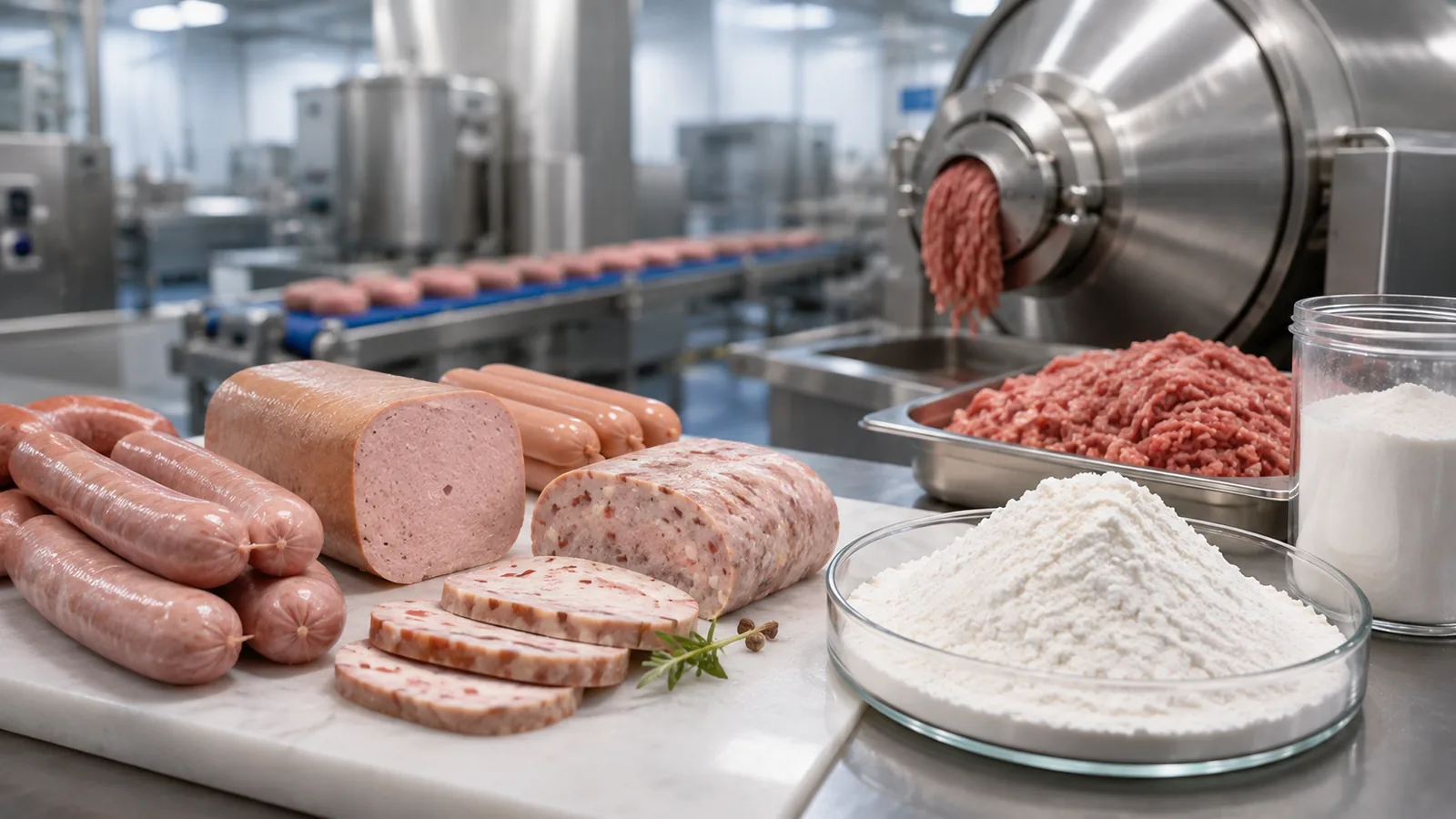
Potato starch for meat products - sausage and meatball processing line

Why this route is worth testing

Meat Products

Potato starch for meat products is evaluated mainly for binding, water retention, cook yield and texture. Native Potato Starch can suit straightforward heated systems, while Modified Potato Starch may be more appropriate where processing stress or storage conditions require additional stability.

Run trials in the complete meat formulation because proteins, salt, phosphates, water addition, chopping or mixing sequence and thermal processing all affect the result. Pregelatinized Potato Flour can also be considered when rapid hydration or early-stage binding is useful.

What each potato ingredient contributes to the formulation

The same starch can behave very differently in an emulsified sausage, a coarse meatball, an injected meat system or a frozen ready meal. Use the finished product and process stress to shortlist the ingredient family before comparing individual grades.

Potato Flakes

Best starting route when you need dehydrated potato solids, fast rehydration, potato flavor and body. Frequently evaluated for fabricated chips, instant mash, bakery, croquettes, snacks and prepared foods. For fried applications, reducing sugar and frying color deserve specific attention.

View product details →

Potato Granules

Best starting route when you need dehydrated potato solids with controlled rehydration, lower-stickiness direction, dense bulk handling and good dry-mix behavior. Especially relevant to instant mashed potatoes, foodservice, portioned dry mixes and selected prepared foods.

View product details →

Native Potato Starch

Best starting route for heated systems that need thickening, gelling, binding or moisture management without a modified starch. It generally requires sufficient heating to gelatinize and should be tested with the actual pH, solids and shear conditions.

View product details →

Pregelatinized Potato Flour

Best starting route when rapid hydration, cold- or warm-water dispersibility, instant thickening, water uptake or early-stage binding is needed before full heating. It is not automatically the best route for strong acid, retort or freeze-thaw stress.

View product details →

Modified Potato Starch

Best starting route when the process requires functionality beyond standard native starch, such as improved tolerance to specific heat, acid, shear, holding or freeze-thaw conditions. Select the exact grade by process requirements and sample validation.

View product details →

Choose the Ingredient Route by Meat Product and Process

The same starch can behave very differently in an emulsified sausage, a coarse meatball, an injected meat system or a frozen ready meal. Use the finished product and process stress to shortlist the ingredient family before comparing individual grades.

Emulsified sausages / hot dogs

Native or Modified Potato Starch, depending on heat, shear and storage

Emulsion stability, batter viscosity, cook yield, fat or water separation, bite, casing fill and texture after chilling.

Meatballs / patties / formed meat

Native Potato Starch, Pregelatinized Potato Flour or selected Modified Starch

Mix handling, forming, water retention, cook loss, shape retention, juiciness, bite and frozen/reheated performance if applicable.

Cooked sliced meats

Native or Modified Potato Starch where formulation and market rules permit

Cook yield, purge after cooling, firmness, slice integrity, surface appearance and texture through the intended shelf life.

Injected / marinated meat systems

Application-specific starch route only where the formula and destination rules permit

Brine stability, pickup, distribution, purge, thermal yield, texture and label or additive compliance.

Frozen / reheated meat products

Modified Potato Starch is often worth comparing when freeze-thaw or reheating stress is significant

Purge after thawing, reheating yield, water migration, bite and holding stability.

Savory meat fillings / prepared foods

Pregelatinized, Native or Modified route depending on when binding and viscosity are needed

Cold-mix handling, filling or depositing, cook stability, oil or water separation, reheating and final mouthfeel.

What to measure in the trial

Measure Retained Value, Not Just Added Water

Water retention in meat products should be judged as a full mass-balance and texture question. A formulation that accepts more water at mixing is not automatically more profitable if the water leaves during cooking, chilling, packaging, freezing or reheating — or if the finished bite becomes soft, gummy or pasty.

Record starting batch weight, added water or ice, post-cook weight, chilled weight and purge during storage. For sliced or portioned products, also record usable slices or saleable pieces. A high gross yield with poor sliceability, breakage or package purge may still reduce the amount of sellable finished product.

  • Added water / ice
  • Raw batch weight
  • Cook yield
  • Purge after chilling
  • Freeze-thaw purge when relevant
  • Sliceable or saleable yield
  • Juiciness, bite and gumminess
  • Package appearance at the end of the test
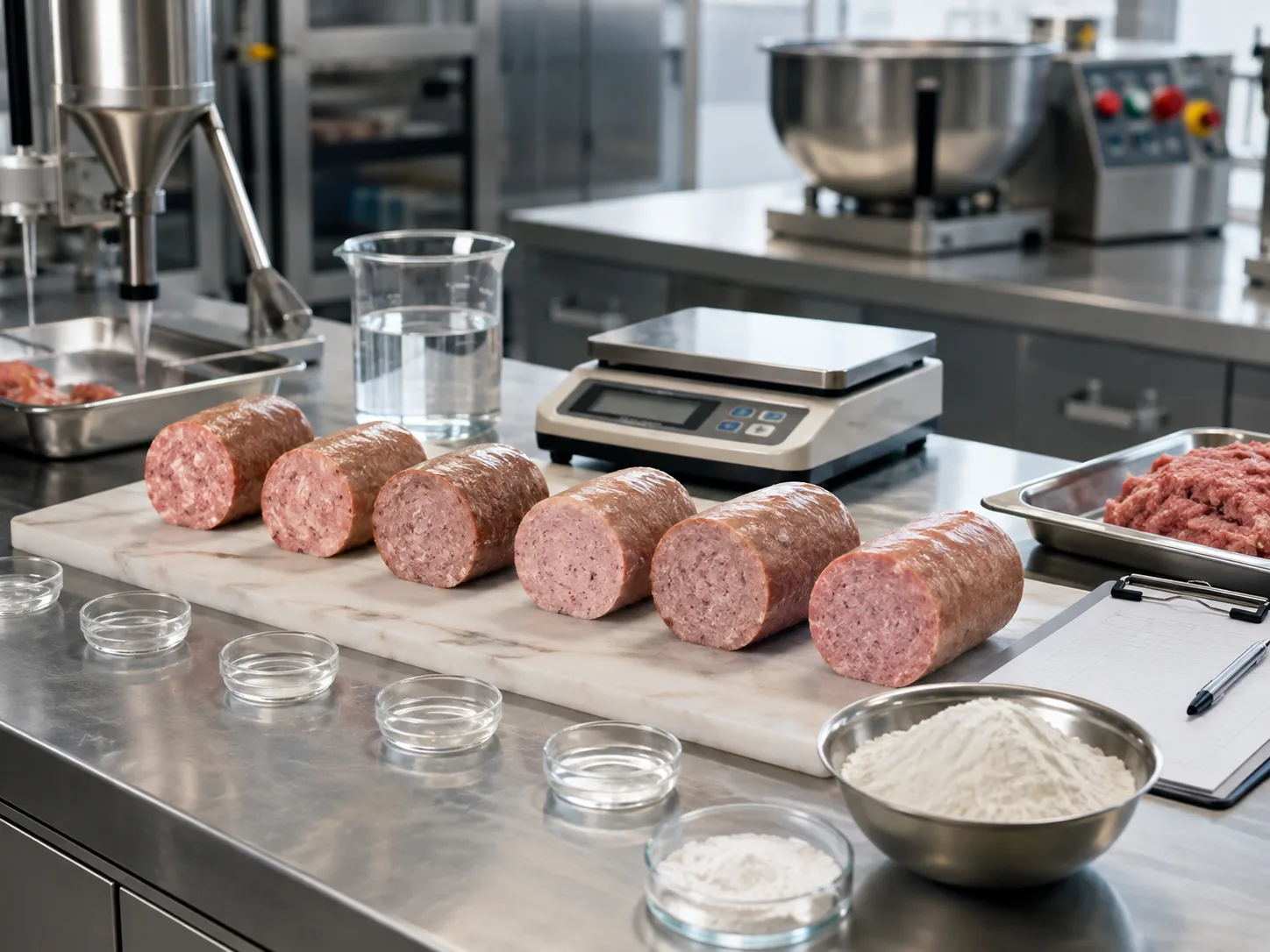
Cook yield and water retention trial of potato starch in formed meat products

Formulation Variables That Change Potato Starch Performance

Potato starch does not work in isolation. Protein extraction, ionic strength, water availability, fat dispersion and thermal history can change the same grade from useful to unsuitable. Document these variables before judging a supplier sample.

Protein system

Different meat blocks and protein functionality change water binding, emulsion behavior and the level of starch support required. Record species or cut, protein target, comminution and major protein ingredients.

Salt / phosphate system

Salt and permitted phosphates affect protein extraction and water management. Record exact levels, addition sequence and destination-market compliance.

Water / ice addition

Water level changes mix viscosity, thermal yield, texture and relative starch concentration. Record total addition, temperature, addition point and final mix temperature.

Fat level and dispersion

Fat changes emulsion stability, lubrication, bite and perceived juiciness. Record fat level, particle size or emulsification step and visible separation after cooking.

Mixing / chopping sequence

Hydration and protein extraction depend on order, time, temperature and shear. Pregelatinized ingredients can build viscosity early if added too soon.

Thermal / storage history

Gelatinization, cook loss, chilling, freezing and reheating all influence final structure. Record core temperature, heating rate, holding, cooling and storage route.

Where Potato Flakes and Potato Granules Fit in Meat Formulations

This website is centered on Potato Flakes and Potato Granules, but meat-product customers should use them only where whole-potato solids serve a real formulation purpose. They provide different functionality from starch and should not be presented as direct starch replacements.

Potato Flakes

Can contribute whole-potato solids, water absorption, potato flavor and body in selected formed foods, savory fillings, croquette-style products or potato-meat combinations. Evaluate flavor, moisture balance, forming and final bite in the complete recipe.

Potato Granules

Can be considered in selected dry blends or formed foods where dense, free-flowing whole-potato solids and controlled hydration are useful. Their approximately 580 g/L bulk-density reference is very different from flakes, so dosing and recipe conversion should be done by weight.

Starch vs Whole-Potato Solids

If the main issue is cook yield, emulsion stability, viscosity or process tolerance, start with the appropriate potato starch route. If the goal is potato solids, flavor or a potato-forward texture, Potato Flakes or Potato Granules may be relevant.

Six-Step Plant Trial for Potato Starch in Meat Products

Keep the process as close as possible to normal production. A bench test can shortlist grades, but commercial approval should reproduce the real mixer, chopper, stuffer, former, cooker, chiller and storage route when scale affects the result.

01 — Define Product & Rules

Record product type, target yield, texture, storage condition, label requirement and destination-market rules before selecting a starch route.

02 — Lock the Control Formula

Use the same meat block, protein system, salt, phosphate, fat, added water or ice and seasoning. Keep one current approved formulation as the control.

03 — Control Addition & Mixing

Record ingredient sequence, water temperature, mixing or chopping time, endpoint temperature and visible mix consistency.

04 — Standardize Forming & Cooking

Use the same stuffing, forming, diameter or portion size, thermal schedule and core-temperature endpoint for every candidate.

05 — Chill, Store, Freeze or Reheat

Evaluate the product through the real commercial route, including chilled storage, frozen storage, thawing or reheating when relevant.

06 — Lock Grade & Acceptance Criteria

Compare yield, purge, bite, sliceability and sensory results, then confirm grade, TDS, test methods, packaging, COA items and signed specification.

OEM / ODM application development: customize the ingredient around your process

For OEM or ODM meat-product projects, customization should start from measurable customer targets rather than a vague request for “more binding.” Depending on technical feasibility, discuss viscosity or hydration direction, water-retention target, process stability, packaging, multilingual labels and private label. Final values require sample validation, agreed test methods, MOQ review and a signed specification.

Product Attribute Targets

Depending on the product family, discuss particle profile, bulk density, reducing sugar direction, hydration, free starch, viscosity, water retention, binding or other measurable attributes that are relevant to the finished product.

Application-Led Grade Development

Share a benchmark product, current supplier specification or target process result. The technical discussion can then shortlist a suitable grade and define what must be demonstrated in the sample or pilot trial.

Packaging & Private Label

After the product specification is approved, discuss bag weight, bag material, multilingual labels, private label, barcode / QR, outer marks, palletization and container-loading requirements.

Scale-Up & Batch Control

A successful lab sample is not the end of qualification. Confirm scale-up behavior, the first commercial batch, retained samples, agreed COA items and the change-control process for repeat orders.

Use samples, TDS and COA as one qualification package

Supplier qualification should connect the exact commercial grade to its current TDS, batch COA, ingredient or additive identity, available certifications and traceability. Also confirm that the intended use and declaration comply with the destination market and the customer’s own formulation policy.

Sample

Use a representative sample in the real or representative process. Record formulation, equipment settings, test conditions and finished-product results so the trial can be repeated.

TDS

Use the Technical Data Sheet to understand the intended grade, specification framework, relevant analytical limits, storage and packaging. Confirm that the TDS refers to the exact commercial grade being offered.

COA

Use the Certificate of Analysis to verify the actual shipment batch against agreed tests and limits. The COA should support—not replace—the signed commercial specification.

Certification & Compliance

Check certificate scope, site, validity, ingredient statement and destination-market requirements rather than relying only on certification logos displayed on a website.

Why this route is worth testing

Compare Potato Starch Suppliers by Saleable Meat Yield, Not Price per Kilogram Alone

A lower starch price does not create value if it increases cook loss, purge, breakage, rework or inconsistent texture. Compare candidates at the same dosage and production conditions, then calculate usable finished output and quality consistency.

  • Exact commercial grade
  • Current TDS and test methods
  • Cook yield at the same thermal endpoint
  • Purge after cooling and storage
  • Bite, firmness and sliceability
  • Mixing / chopping / stuffing behavior
  • Freeze-thaw and reheating when relevant
  • Batch COA and traceability
  • MOQ and lead time
  • Packaging and shipment terms

Meat Product Buyer Questions

Which potato starch should I test first for sausages or processed meat?

Start from the process. Native Potato Starch is a logical first route for straightforward heated systems with adequate gelatinization. If the product faces stronger shear, refrigeration, freezing or reheating, compare a suitable Modified Potato Starch grade. Use Pregelatinized Potato Flour when rapid pre-cook hydration or early binding is the specific need.

Can potato starch improve cook yield in meat products?

It can contribute to water management and binding in suitable formulations, but cook yield depends on the complete protein, salt, phosphate, water, fat and thermal system. Measure standardized pre-cook and post-cook weights and verify that higher yield does not come with unacceptable softness or purge.

Can Potato Flakes replace potato starch in meat products?

Not as a direct 1:1 replacement. Potato Flakes provide dehydrated whole-potato solids, flavor, water absorption and body, while potato starch is selected mainly for binding, gel structure, viscosity or process stability.

Can Potato Granules be used in meat products?

They may be useful in selected dry blends, formed products or potato-containing meat formulations where dense whole-potato solids and controlled hydration are useful. They are not the default solution for cook yield or emulsion stability.

Is modified potato starch always better than native starch?

No. A modified grade is justified only when its additional process tolerance solves a real customer problem. In a straightforward heated formulation, Native Potato Starch may be simpler and sufficient.

What should I send when requesting a sample?

Provide product type, protein system, water or ice addition, salt and phosphate system if used, fat level, mixing or chopping sequence, cook profile, storage condition, target yield, texture and any label or regulatory constraints.

RFQ · Samples · TDS · COA

Build a Potato Starch Trial Around Your Meat Process

Tell us the meat product, formulation framework, added water or ice, mixing or chopping process, thermal profile, storage condition, target yield and texture. We can help shortlist Native, Pregelatinized or Modified Potato Starch for a controlled sample trial — and discuss Potato Flakes or Potato Granules only when whole-potato solids are relevant.