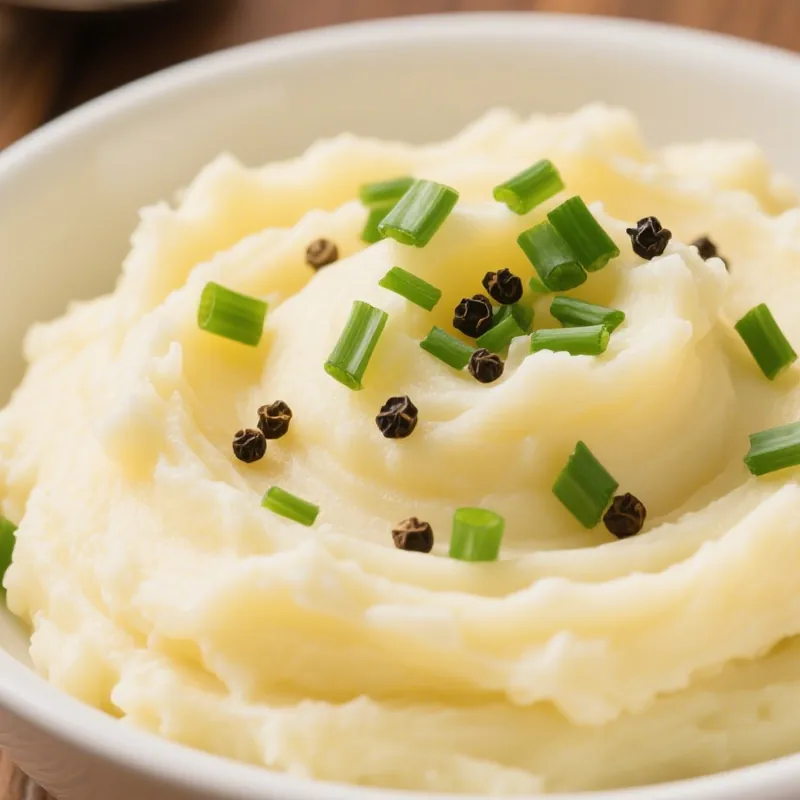
Instant Mashed Potatoes Application

Potato Granules & Potato Flakes for Instant Mashed Potatoes

For instant mashed potatoes, foodservice mash, dry potato mixes and prepared-potato systems, the right dehydrated potato ingredient must deliver more than a good first spoonful. Procurement and R&D teams need repeatable hydration, controlled stickiness, natural potato texture, prepared yield and holding stability under the actual preparation method used by kitchens, factories or consumers.

If you are searching for potato granules for instant mashed potatoes, potato granules for foodservice, instant mashed potato flakes, food grade potato granules or a bulk potato granules supplier, start by defining the preparation protocol and target texture. Potato Granules and Potato Flakes are both core dehydrated potato ingredients, but their hydration, bulk density and mouthfeel should be compared under the same water, mixing and holding conditions.

Potato Granules for Instant MashInstant Mashed Potato FlakesFoodservice Portion ConsistencyControlled RehydrationSample Preparation Trial
Potato granules and potato flakes for instant mashed potatoes - foodservice mash preparation

Define what a good prepared mash must deliver before selecting the ingredient

A dry ingredient can look consistent in the bag and still fail after preparation. Set measurable finished-product targets first so supplier trials answer the same commercial question every time.

01

Repeatable hydration

Define water-to-solids ratio, water temperature, addition sequence, mixing tool, mixing time and rest time. The approved ingredient should tolerate normal operator variation without creating dry pockets, lumps or excessive viscosity.

02

Natural potato texture

Decide whether the target is smooth and cohesive, light and fluffy, slightly mealy, or more grain-defined. Potato Granules and Potato Flakes can move texture in different directions, so the sensory target should be written before the sample comparison.

03

Prepared yield & portion economics

Compare kilograms of acceptable prepared mash per kilogram of dry ingredient, not only price per metric ton. Water demand, solids contribution, serving weight and reject or rework levels all affect the real cost per portion.

04

Holding & service stability

For foodservice, catering or central kitchens, evaluate the mash after realistic hot holding, reheating or serving delay. A product that is excellent immediately after mixing may become too thick, sticky, dry or weak after 10–30 minutes.

What each potato ingredient contributes to the formulation

Potato Granules are a strong starting route when controlled rehydration, lower-stickiness direction, dense dry handling and portion consistency matter most. Potato Flakes are a strong route when faster hydration and a more cohesive potato body are preferred. Some formulations use both, but the blend should be developed by trial rather than copied from another recipe.

Potato Granules

Best starting route when you need dehydrated potato solids with controlled rehydration, lower-stickiness direction, dense bulk handling and good dry-mix behavior. Especially relevant to instant mashed potatoes, foodservice, portioned dry mixes and selected prepared foods.

View product details →

Potato Flakes

Best starting route when you need dehydrated potato solids, fast rehydration, potato flavor and body. Frequently evaluated for fabricated chips, instant mash, bakery, croquettes, snacks and prepared foods. For fried applications, reducing sugar and frying color deserve specific attention.

View product details →

Pregelatinized Potato Flour

Best starting route when rapid hydration, cold- or warm-water dispersibility, instant thickening, water uptake or early-stage binding is needed before full heating. It is not automatically the best route for strong acid, retort or freeze-thaw stress.

View product details →

Raw-material and preparation control points for instant mashed potatoes

These references turn Potato Granules and Potato Flakes specifications into practical preparation questions. Final commercial limits must be tied to the exact grade, agreed method, signed specification and batch COA rather than copied from a generic website value.

Control pointCurrent reference / trial settingWhy the buyer should care
Potato Granules particle size40–60 mesh referenceInfluences dry flow, wet-out, hydration rate and the degree of grain perception in the prepared mash.
Potato Granules bulk densityApprox. 580 g/L referenceAffects package fill, storage, feeder calibration and why granules cannot be converted from flakes by visual volume.
Free soluble starch / viscosityLow reference for granulesHelps explain stickiness and pastiness tendency, but the finished result also depends on water temperature, mixing energy and holding time.
Potato Flakes comparison20–40 mesh and approx. 220–250 g/L current referencesFlakes generally hydrate faster and occupy more dry volume; compare them when a smoother, more cohesive body or faster preparation is preferred.
MoistureGranules ≤7%; Flakes 6–8% current referencesChanges dry-solids calculation, water demand and batch-to-batch formulation consistency.
Preparation protocolDefine water ratio, temperature, mixing and holdingA specification is useful only when the same written preparation method is used to compare samples and commercial lots.

Potato Granules for Instant Mashed Potatoes & Foodservice

Build repeatable mash texture from kitchen preparation to industrial portioning

Buyers searching for potato granules for instant mashed potatoes or potato granules for foodservice usually need more than fast hydration. They need a preparation window that is forgiving, repeatable and capable of delivering the same portion texture across operators, batches and holding times.

During qualification, define the water-to-solids ratio, water temperature, addition sequence, mixing tool, mixing time and rest time. Record wet-out, lumps, smoothness, grain perception, gumminess, potato flavor, prepared yield and texture after 10, 20 or 30 minutes of holding if that matches your service condition. This turns a sample comparison into a realistic foodservice test rather than a one-time bench demonstration.

If your target is a more cohesive or faster-hydrating mash, compare Potato Flakes in the same trial. If your priority is lower stickiness, controlled hydration and denser dry handling, Potato Granules may be the stronger starting point. Some formulations also use a controlled combination of flakes and granules, but the ratio should be developed around the finished texture and preparation method rather than copied from another recipe.

  • Water-to-solids ratio and prepared yield
  • Water temperature and addition sequence
  • Wet-out, lumps and mixing tolerance
  • Smoothness, grain perception and gumminess
  • Potato flavor and seasoning compatibility
  • Texture after realistic foodservice holding
Instant mashed potato made from potato granules on a foodservice holding line

Build a preparation protocol that kitchens, factories and QA teams can repeat

Instant mash trials often become unreliable because water temperature, addition order or mixing changes from one sample to another. Lock the method first, then compare the ingredient.

01 · Define the serving target

Write the desired texture, potato flavor, serving temperature, portion weight and acceptable holding time. If the product will be seasoned, enriched with milk or fat, or served from a heated holding unit, include those conditions in the target.

02 · Standardize water

Measure water-to-solids ratio and actual water temperature. Record whether water quality, salt, milk solids or other dissolved ingredients are present because they can change hydration and viscosity.

03 · Standardize addition

Fix whether dry ingredient is added to water or water to dry ingredient, the addition rate and whether the formula is preblended with seasoning or other powders. Addition sequence can strongly affect lump formation.

04 · Standardize mixing & rest

Use the same tool, speed, mixing time and rest time for every sample. Excessive mixing can increase pastiness, while insufficient mixing can leave dry particles or uneven hydration.

05 · Evaluate prepared quality

Record wet-out, lumps, smoothness, grain perception, gumminess, potato flavor, prepared yield and portion repeatability immediately after preparation.

06 · Evaluate holding & reheating

Recheck texture after the actual service interval, such as 10, 20 or 30 minutes, and after reheating if applicable. This shows whether the approved texture remains usable through the customer’s real operating window.

Potato Granules or Potato Flakes: choose the preparation behavior your mash needs

Potato Granules are a strong starting route when controlled rehydration, lower-stickiness direction, dense dry handling and portion consistency matter most. Potato Flakes are a strong route when faster hydration and a more cohesive potato body are preferred. Some formulations use both, but the blend should be developed by trial rather than copied from another recipe.

ComparePotato GranulesPotato Flakes
Particle formFine, dense granulesThin dehydrated flakes
Bulk densityApprox. 580 g/L referenceApprox. 220–250 g/L reference
HydrationMore controlled wet-outGenerally faster hydration
Free-starch / stickiness tendencyLower reference; selected for controlled textureGrade and process dependent; can build more body
Instant mash / foodserviceStrong starting point for portion consistency and lower gumminessStrong option for faster hydration and smoother cohesive body
Dry handlingDense, free-flowing format useful for dry systemsLower density and larger flake structure
SubstitutionDo not replace flakes 1:1 without trialsDo not replace granules 1:1 without trials

Approve Potato Granules with a preparation protocol your team can repeat

A sample is most useful when procurement, R&D and production agree in advance how it will be tested. Keep the benchmark, recipe, water and preparation conditions constant so the difference you observe is really caused by the candidate Potato Granules.

Set a benchmark and written method

Use your current approved ingredient or target retail/foodservice product as the benchmark. Write down sample weight, water amount, temperature, addition sequence, mixing tool, mixing time, rest or hold time and evaluation criteria before opening the sample.

Measure both dry and prepared performance

Record appearance, flow, bulk density and handling before hydration, then record wet-out, lumps, texture, flavor, prepared yield and holding stability after preparation. For dry mixes, also monitor segregation, dosing and package fill at realistic scale.

Lock the result into the commercial specification

Once the trial is approved, identify which analytical and functional properties must remain controlled in commercial supply. Link those properties to the signed specification and batch COA instead of relying on the sample name or appearance alone.

Discuss product attributes and packaging around your application target

For qualified projects, OEM and ODM discussions can go beyond the bag design. Depending on technical feasibility, raw material, production capability, MOQ and test method, we can evaluate target particle profile, bulk density, hydration behavior, free-starch direction, functional texture and packaging requirements before fixing the commercial specification.

Particle profile & dry handling

Discuss sieve range, fines control, flow or dosing requirements where technically feasible. If your plant uses volumetric feeders or high-speed filling, include those handling conditions in the qualification trial.

Hydration, free starch & texture direction

Share the target preparation method and benchmark texture. We can evaluate whether the project needs slower or faster wet-out, lower stickiness, a specific prepared texture or a different balance between Potato Granules and Potato Flakes.

Application-led ODM development

If you do not yet have a finished specification, provide the end product, equipment, preparation instructions and target performance. The development route can compare candidate grades and related starch ingredients before locking a measurable specification.

Packaging & private label

Discuss bag weight, label language, customer artwork, private label, barcode or QR requirements, outer marks, palletization and container plan. Final packaging must be compatible with product protection, production capability and destination requirements.

Use documents and batch traceability to keep a good trial result repeatable

The purpose of technical documents is to connect the approved sample to routine commercial supply. Ask for the current grade-specific information and verify that certification scope, batch testing and traceability match your own supplier-approval process.

TDS — Technical Data Sheet

Use the current TDS to confirm product description, intended specification, storage, packaging and relevant analytical or functional references for the exact Potato Granules grade being evaluated.

Batch COA

Use the COA to review the analytical results for the actual production batch. Agree in advance which parameters and methods must appear if bulk density, moisture, microbiology or another property is critical to acceptance.

Traceability & retained samples

Batch coding, raw-material records and retained samples help investigate differences if a commercial batch behaves differently from the approved trial. Ask how the supplier links finished bags to production and QC records.

Certificates & market documents

Check certificate holder, site, validity, scope and relevant product coverage rather than relying on logos alone. Destination-market declarations or label documents should be confirmed for the exact order and market.

How to Compare Potato Granules Suppliers

Compare usable production value, bulk density, handling efficiency and finished-texture fit — not only price per metric ton.

A lower quoted price can be expensive if the ingredient creates inconsistent portions, excess mixing, poor dry flow, higher packaging volume or unstable prepared texture. Supplier qualification should combine specification, line performance, documentation and commercial reliability.

When comparing a bulk Potato Granules supplier, normalize the quotation to the same Incoterm, packaging, loading basis and document scope. Then compare how much acceptable finished product the ingredient creates under your real preparation or plant process. A slightly higher ingredient price may still offer better total value if yield, consistency and operating simplicity improve. For B2B sourcing, procurement teams may describe the same need as a manufacturer, producer, exporter, wholesale supplier, distributor, B2B supplier, commercial supplier, industrial supplier, import supplier or export supplier. We treat those labels as the start of qualification, not proof of suitability: importers, distributors, wholesalers, food manufacturers and international buyers should still align the exact food-grade dehydrated granules specification, sample approval, batch consistency, packaging and stable supply. Factory-direct supply and bulk purchase enquiries should identify the application, expected volume and destination before quotation.

  • Same test method for moisture, mesh and bulk density
  • Representative sample from the intended commercial grade
  • Prepared yield and portion consistency
  • Dry flow, dosing and package-fill behavior
  • Batch COA, traceability and certificate scope
  • Lead time, packaging, logistics and technical response

Instant mashed potato buyer questions

Are Potato Granules or Potato Flakes better for instant mashed potatoes?

Neither is universally better. Potato Granules are often selected for controlled rehydration, lower-stickiness direction and foodservice portion consistency, while Potato Flakes are often selected for faster hydration and a smoother or more cohesive body. Compare both under the same preparation method and finished-texture target.

Can Potato Granules and Potato Flakes be blended in one instant mash formula?

Yes, a blend can be evaluated when you want to balance controlled hydration, body, mouthfeel and preparation tolerance. Develop the ratio through a gradient trial and judge prepared yield, stickiness, texture and holding rather than copying another manufacturer’s percentage.

Why does instant mashed potato become gummy or pasty?

Free starch, excessive mixing, high water temperature, aggressive shear, ingredient ratio and holding time can all contribute. Compare the candidate ingredient under a written protocol before changing several formulation variables at once.

Why does bulk density matter for Potato Granules?

The current granules reference is about 580 g/L, much denser than Potato Flakes at roughly 220–250 g/L. Density affects warehouse volume, feeder settings, package fill and recipe conversion, so substitutions should be made by weight and validated in preparation.

How should prepared yield be compared?

Use the same dry ingredient weight, water ratio, preparation method and target texture, then weigh the acceptable prepared mash. The most useful comparison is cost per acceptable serving or kilogram of prepared product, not dry ingredient price alone.

How should foodservice holding stability be tested?

Prepare the mash under the intended kitchen method, then assess texture at realistic service intervals such as 10, 20 and 30 minutes if those times match your operation. Record thickening, drying, water release, stickiness and portionability.

What should I include in an RFQ for instant mashed potato ingredients?

Provide the current or target ingredient, preparation method, water temperature, target texture, dry-mix composition if relevant, trial or annual volume, packaging, destination port and required documents. A benchmark sample or current specification is especially useful.

Can Potato Granules or Potato Flakes be customized for an instant mash project?

Qualified OEM or ODM projects can discuss technically feasible particle profile, bulk density direction, hydration, free-starch or texture targets together with packaging and private label. Final targets require sample validation, agreed methods, MOQ review and a signed specification.

RFQ · Samples · TDS · COA

Build a repeatable instant mashed potato preparation with the right dehydrated potato ingredient.

Tell us how your product is prepared, the texture you want, the portion or yield target, the ingredients already in the formula and the market you serve. We can help you shortlist Potato Granules, Potato Flakes or a trial blend and organize samples, TDS, COA and a commercial quotation.